City walk | Maastricht liberated 80 years
 Distance: 3.2 km | Duration: 50 minutes
Start: Maastricht Store, Dinghuis
End: Market
Maastricht was one of the first Dutch cities to be liberated on 13 and 14 September 1944, after four years and four months of German occupation. For Maastricht people, this finally marked the end of World War II.
This walk takes you past special places in the city and offers a respectful look at this sweeping chapter in Maastricht's history. At the same time, the route celebrates the joy of the city as it is today, free and alive.
For Maastricht, the occupation began on 10 May 1940 in the Wyck district. The occupation lasted exactly four years, four months and four days. On 13 and 14 September 1944, the city was liberated.
Start of walk
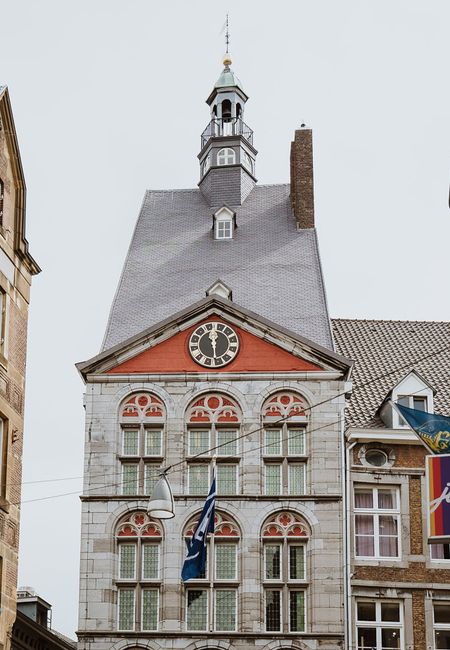
You start the walk at the Dinghuis, Kleine Staat 1.
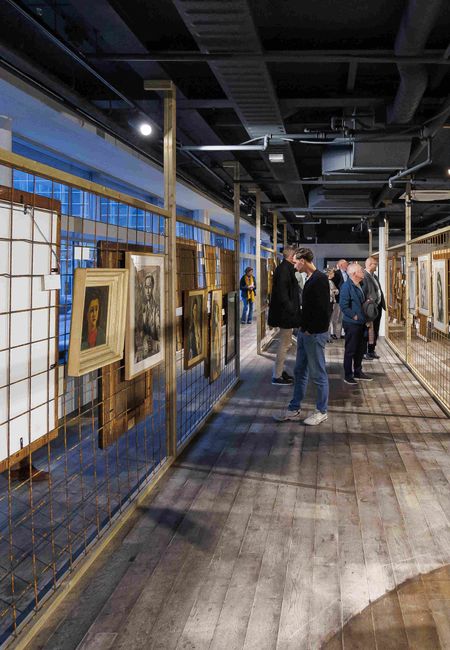
During the war, the Dinghuis served as a command post for the head of the local air protection service. There was little chance of an air raid, partly because the building was narrow. In addition, the many telephone cables, remnants of the former telephone exchange, made it a strategic location for this function. The thick walls provided additional protection, keeping the building shrapnel-free.
During wartime, the Dinghuis hosted several exhibitions by the National Socialist cultural organisation 'De Spade'. After the war, it housed, among others, the Cadi Club, a canteen for Dutch soldiers.
Continue walking through Kleine Staat and turn left into Maastrichter Brugstraat.
-
Dinghuis - Maastricht Store
Dinghuis - Maastricht Store
The Maastricht Store is located in the Dinghuis, a building with a long history. More info on Dinghuis - Maastricht Store
Stumbling stones
Maastricht is also home to many Stumbling Stones that remind us of all the victims. In this walk, you will come across many of them. You can look up and read the stories here.
On Maastrichter Brugstraat No 31 lived Alfred and Hannchen Löwenstein and their daughters. After Kristallnacht, the couple decided to move to Maastricht. They were rounded up in 1943 and died three days after their arrival in Sobibor. They were an extraordinary family. All daughters of the Löwenstein family were allowed an education, exceptional for the time. Their six daughters survived the war.
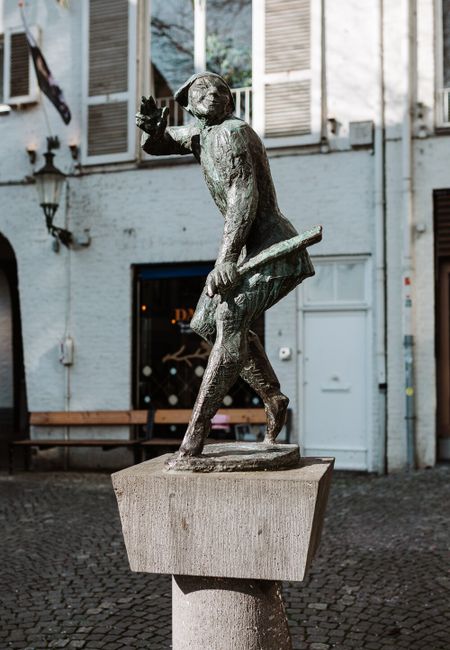
Mestreechter Geis
Continue down the street. At the end, just before the Servaas bridge, turn right to the statue of the 'Mestreechter Geis'.
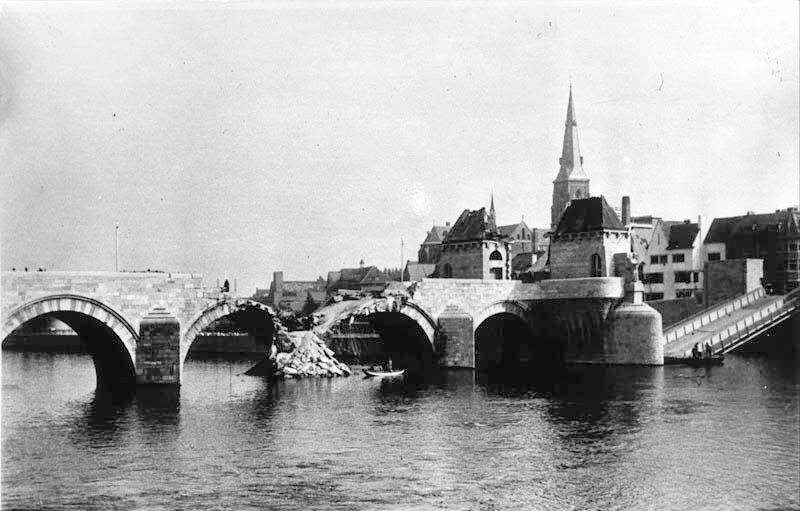
During the German invasion on 10 May 1940, the Maastricht bridges across the Meuse were blown up in an attempt to keep the enemy out of the city. At 6am, the Saint Sint Servaasbrug bridge was destroyed, followed by the Wilhelmina Bridge and the Railway Bridge at 6.15am.
-
Mestreechter Geis
Mestreechter Geis
A difficult to translate concept made visible by sculptor Mari Andriessen (1897-1979) in a sculpture of the same name. More info on Mestreechter Geis
-
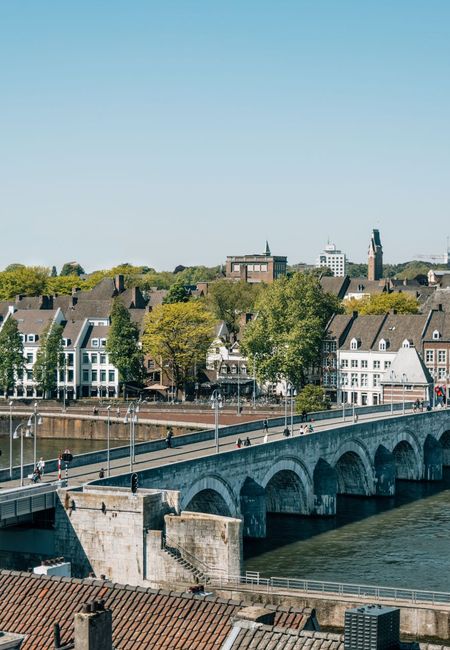
Saint Servatius Bridge
Saint Servatius Bridge
The icon of Maastricht, named after the fourth bishop of Maastricht: Saint Servatius. More information about Saint Servatius Bridge
Stokstraat
At the 'Mestreechter Geis' you enter the Stokstraat quarter and walk down Stokstraat. During the war, this street was forbidden to German soldiers. Warning signs hung everywhere warning them not to enter the street. Yet the many cafés and prostitutes exerted an irresistible attraction on them. Not infrequently, soldiers were robbed and found undressed in the Meuse after a night in Stokstraat, a silent form of resistance.
Stokstraat also housed shelters. In two buildings with interconnected cellars, hundreds of people could seek refuge. At house number 28, there was room for 100 people, while house number 21 housed as many as 300 shelterers.
-
Stokstraat Quarter
Stokstraat Quarter
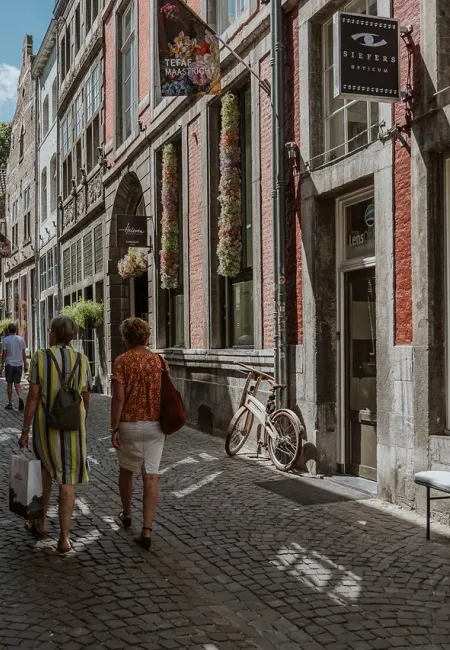
For lovers of luxury and style: shop exclusive fashion in the bustling Stokstraat Quarter, full of charm and Maastricht's oldest streets. More about Stokstraat Quarter
Onze Lieve Vrouwe square
Continue your route via Plankstraat to Onze-Lieve-Vrouweplein.
Along the way, you'll pass Havenstraat, where a bomb fell on the vicarage in the summer of 1942. Fortunately, the parish priest was in church at the time and remained unharmed.
The bombs were from a stray English plane that, while being pursued by a German fighter, shed its load - probably to make a faster escape. The other bombs came down in the surrounding streets. A total of 11 people were killed in the process.
Walk on to Basilica of Our Lady.
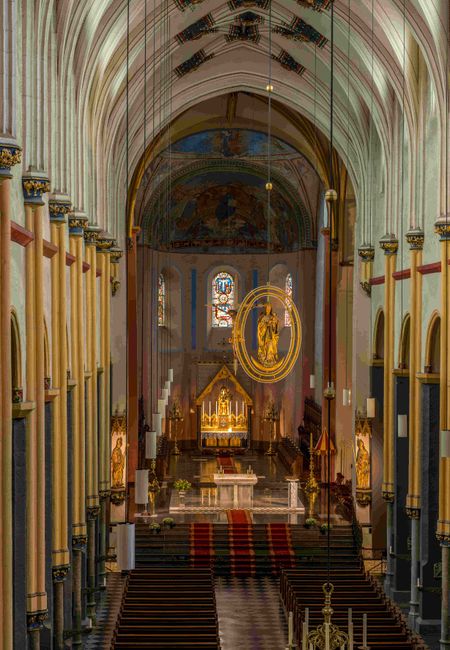
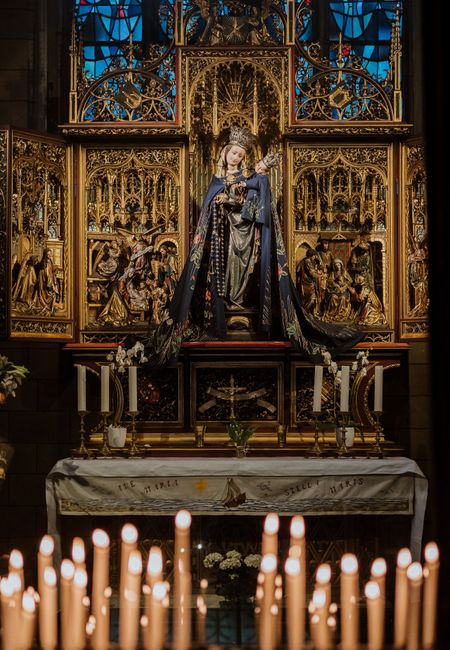
During the war, the basilica suffered some damage, and the large swinging bell was looted by the Germans. People could take shelter in the crypt. Light a candle in the chapel for the war dead or commemorate them in silence.
-
Basilica of Our Lady
Basilica of Our Lady
Visit the Basilica of Our Lady: an ancient, atmospheric pilgrimage church full of history, silence and candlelight in Maastricht. More about Onze Lieve Vrouwebasiliek
-
Onze Lieve Vrouwe square
Onze Lieve Vrouwe square
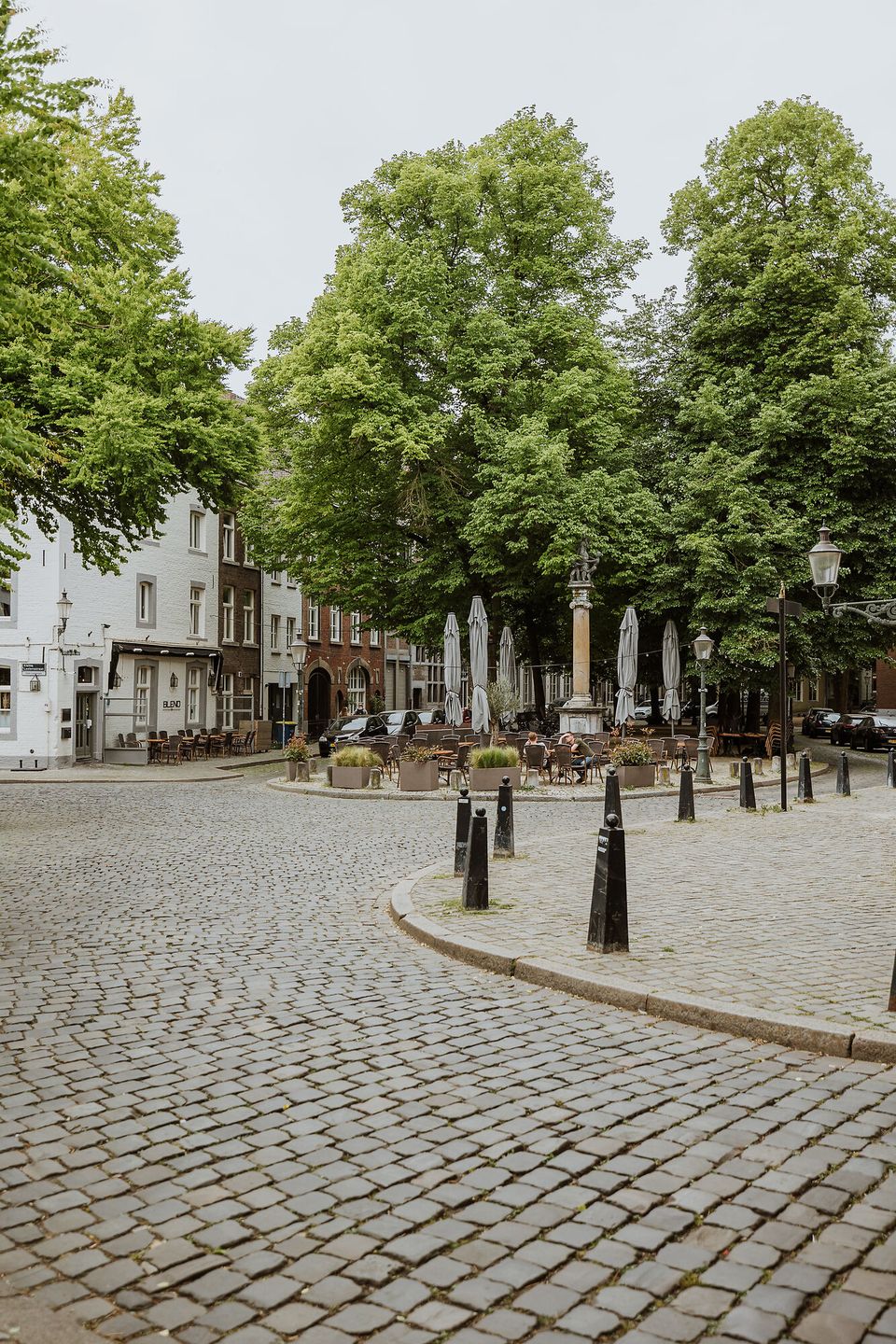
Attractive square in the oldest part of the city within the late Roman castellum. More info on Onze Lieve Vrouwe square
Break
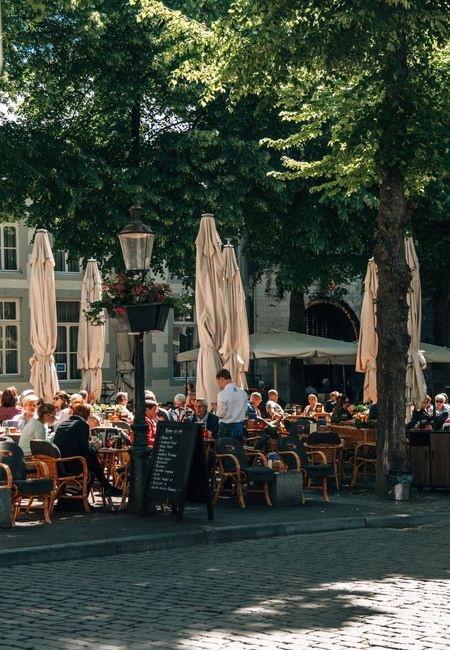
Now is a good time to take a break at one of the many cafés on Onze-Lieve-Vrouweplein, and after the break continue on towards Koestraat.
Cow Street
On the corner of Koestraat and Cortenstraat, a little hidden away, you will find a beautiful facade sculpture by Maastricht sculptor Charles Vos: a hideaway Madonna. Mary is represented here as the patroness of those in hiding during the war. The relief bears the name 'Our Lady of the Good Dive'. Mary is depicted on clouds, with the child on her right arm, watching the four hiders under her cloak. The Maastricht star, a bomber and a dove of peace also adorn the sculpture.
Continue walking down Koestraat.
At Koestraat number 12, Gerard Soesman lived. Gerard did resistance work for the Communist Party of the Netherlands and, a week before the liberation, was murdered in Auschwitz at the age of 22. His Struikelsteentje can be found here.
De Bisschopsmolen
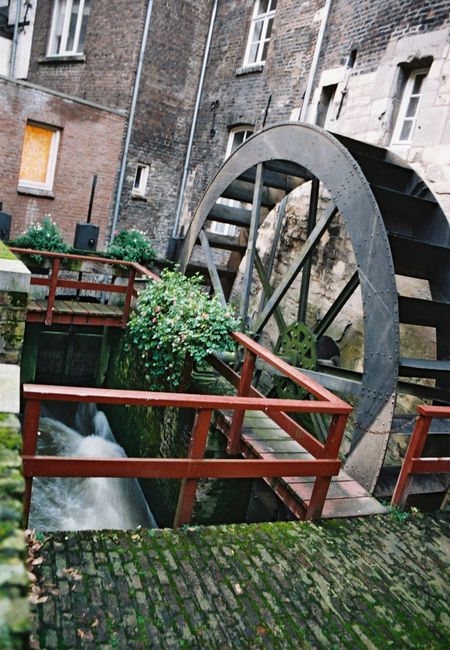
Walk on to de Bisschopsmolen, famous for its delicious bread and flans. Take a look around the mill here and sample a piece of flan 'to go' to enjoy on the go!
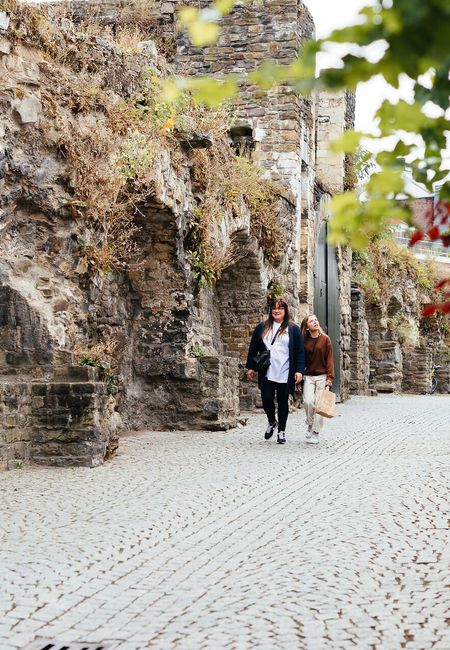
Walk through the Stenenbrug and turn left. Take Pieterstraat and Nieuwenhofstraat to reach de Zwingelput, where you go up the city wall.
-
De Bisschopsmolen
De Bisschopsmolen
This water mill was owned by Godfrey of Bouillon in the 11th century and by the Prince-Bishop of Liège after his death. More info on De Bisschopsmolen
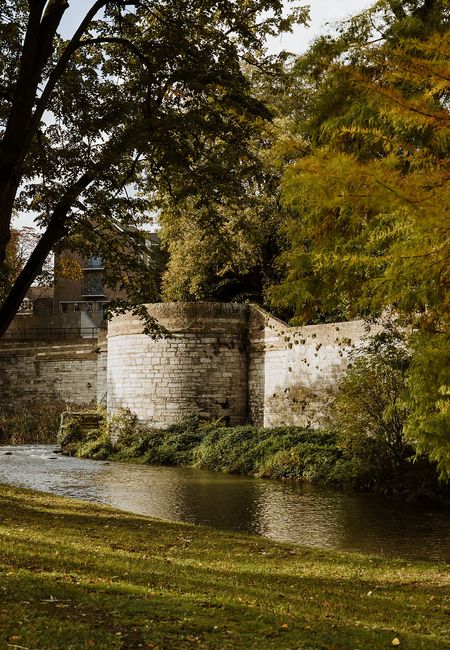
Fancy an extra loop? Then continue your way through Ridderstraat. At the end, at the stone Knight, turn left and then immediately right to continue walking towards the Helpoort. When you have walked under the HelpoHelpoortn right to the Faliezusterpark, the Faliezuster monastery and the Pater Vincktorentje. Cross the street and walk along the rampart towards the city park, then to Nieuwenhofstraat and de Zwingelput. Go up the city wall here.
-
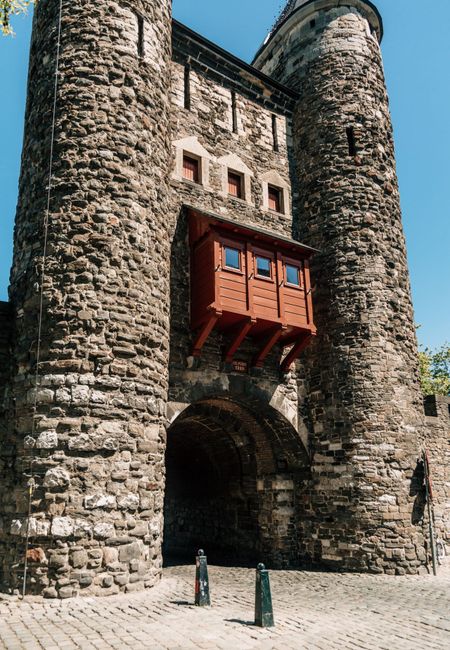
Helpoort gate
Helpoort gate
The only city gate still present in Maastricht and also the oldest city gate in the Netherlands. More info on Helpoort
-
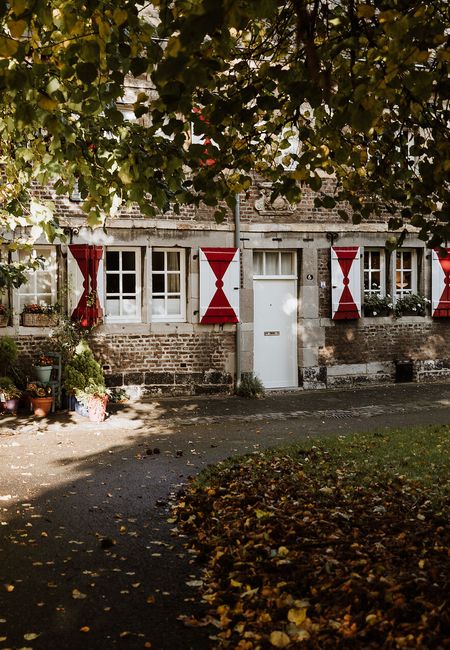
Faliezusterspark
Faliezusterspark
This park contains historical monuments and commemorates the medieval Faliezusters. More info on Faliezusterspark
-
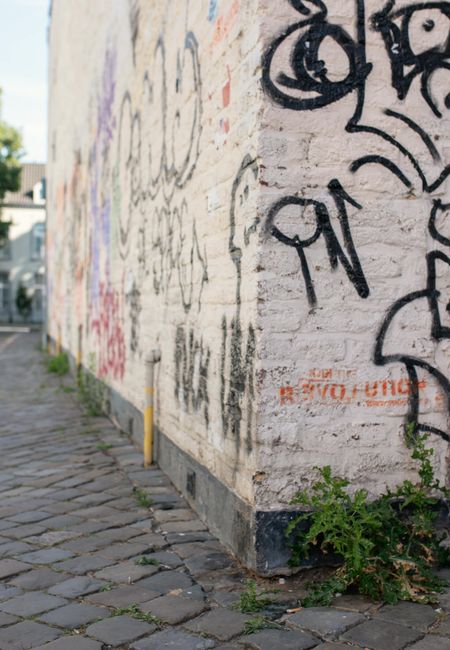
De Zwingelput
De Zwingelput
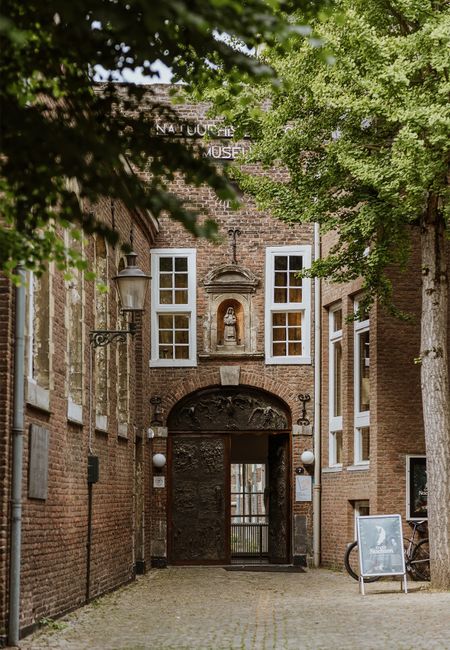
A picturesque spot close to the University Library and the Natural History Museum. You will also find all kinds of street art here. More info on De Zwingelput
On the city wall, you have a nice view of the Stadspark (city park) and the Tapijn Barracks. The soldiers stationed at the Tapijnkazerne were ordered in 1940 to slow down the advance of German troops as much as possible, including by blowing up bridges. From May 1940 to September 1944, the Tapijnkazerne was in use by the occupying forces. After liberation, it was the command centre of the US 9th Army for several months. Today, it is part of Universiteit Maastricht.
Walk over the rampart and turn right down the stairs to Grote Looiersstraat. At the bottom of the stairs, continue to the right across Bosquetplein and then into Grote Looiersstraat.
Great Tanner Street
On Grote Looiersstraat is a building with a long history, with a special period just after the liberation of Maastricht.
For many hundreds of Maastricht people, suspected of being country traitors, the liberation was no celebration. They were not arrested gently and ended up in Camp de Grote Looier, often unjustly accused. There was room for about 700 prisoners, but more than 1,000 were locked up. Women slept on wooden cots, while men lay on straw. There were large barrels for defecation. There was a washroom with 12 taps. Prisoners were often severely mistreated. It was a dark history, but not unique to Maastricht.
Continue via Achter de Molens and Kapoenstraat. At Kapoenstraat 8 is the Struikelsteentje for Isaac Sternveld. Isaac was taken to Camp Vught on 8 April, aged 81, and from there to Sobibor, where he was gassed.
-
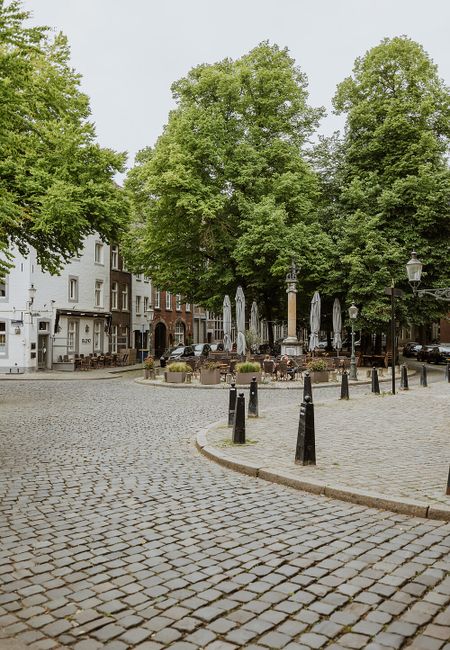
Square in Grote Looiersstraat
Square in Grote Looiersstraat
The Grote Looierstraat is named after the tanners who worked and lived here. They washed hides in the Jeker branches. More info about Pleintje Grote Looiersstraat
Vrijthof square
Walk down Kapoenstraat all the way to Vrijthof. At the spot where you walk onto Vrijthof, there is a bronze plaque (by the fountain). In 1974, this plaque was presented to Maastricht by the veterans of the Old Hickory Division, who liberated the city on 13/14 September.
-
Vrijthof square
Vrijthof square
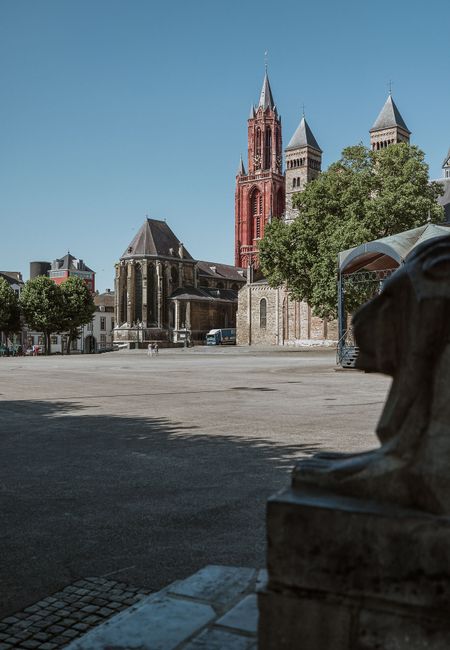
This romantic and historic square is Maastricht's largest. More info on Het Vrijthof
Markt square
Cross the Vrijthof and walk along Helmstraat and Grote Gracht to the Markt. On the way, pass the Struikelsteentje on Grote Gracht 4 for Abraham Moszkowicz. In 1942, Abraham and his family were arrested and put on transport to Westerbork, and then to Auschwitz. His wife and two children are murdered immediately on arrival. Abraham and his son Max are selected for forced labour. Just under a month before liberation, Abraham dies. Max survives and returns to Maastricht after 1945, aged 18. Max becomes a successful and well-known lawyer. He never spoke about the war to his children.
On the day of the raid, a German officer appeared at the city hall. He demanded the names of ten prominent Maastricht citizens from mayor W. Kessenich. That same day, they were taken hostage, a ploy by the occupier to keep the Maastricht population calm. If there were actions, the hostage-takers would be shot. The list included five Maastricht people from Wyck and five from the rest of the city. They were held for two and a half days.
A special memorial are the flags displayed on either side of the staircase in the town hall since the liberation of Maastricht. They are the flags of the French and Belgian towns liberated by the Old Hickory Division.
-
Markt square
Markt square
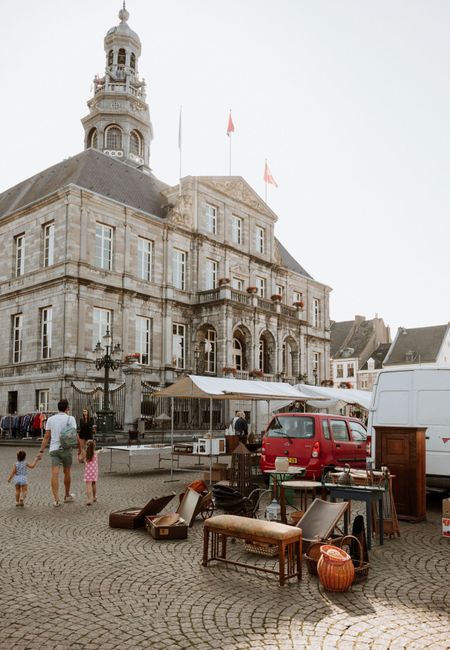
The square takes its name from the commodity markets that have been held here for centuries. More info on De Markt
-
City Hall
City Hall
The City Hall was built in the 17th century under master builder Pieter Post. More info on City Hall
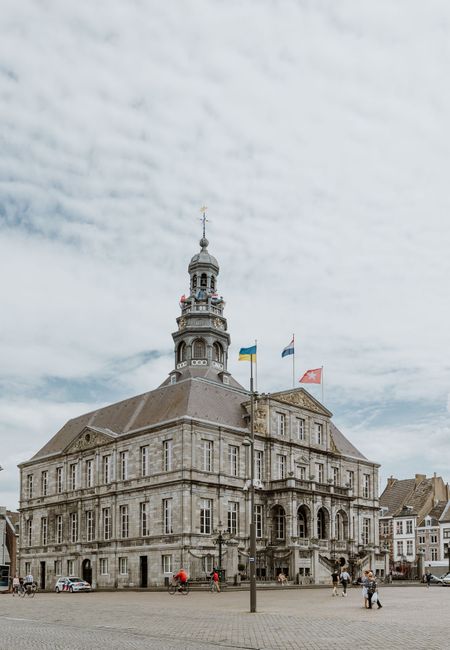
This is where the 'Maastricht - 80 years liberated' walk ends on the Market Square.