
The public space: Maastricht’s largest museum
Written by: Renée Schmeetz
In parks, on squares and in public gardens. On façades or on buildings. In streets and alleyways. You often walk or cycle right past them: works of art in public spaces. They are there for everyone. Visitors to the city centre and residents of the neighbourhoods. The city’s largest museum can simply be found in the open air. You’ll see sculptures of famous Maastricht residents or religious icons. Others pay tribute to a tradition or mark a special place. They’ve been created by both local talent and international artists. Each work tells a different story. Stop for a moment and let them take you on a journey through Maastricht’s rich history – from the distant past to the present day.
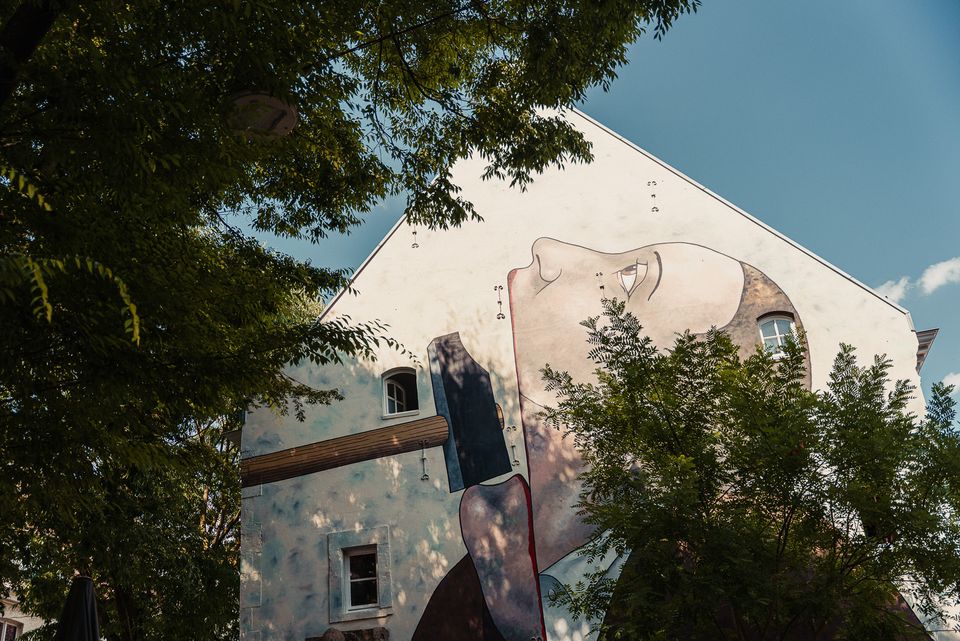
A Reminder of the Romans
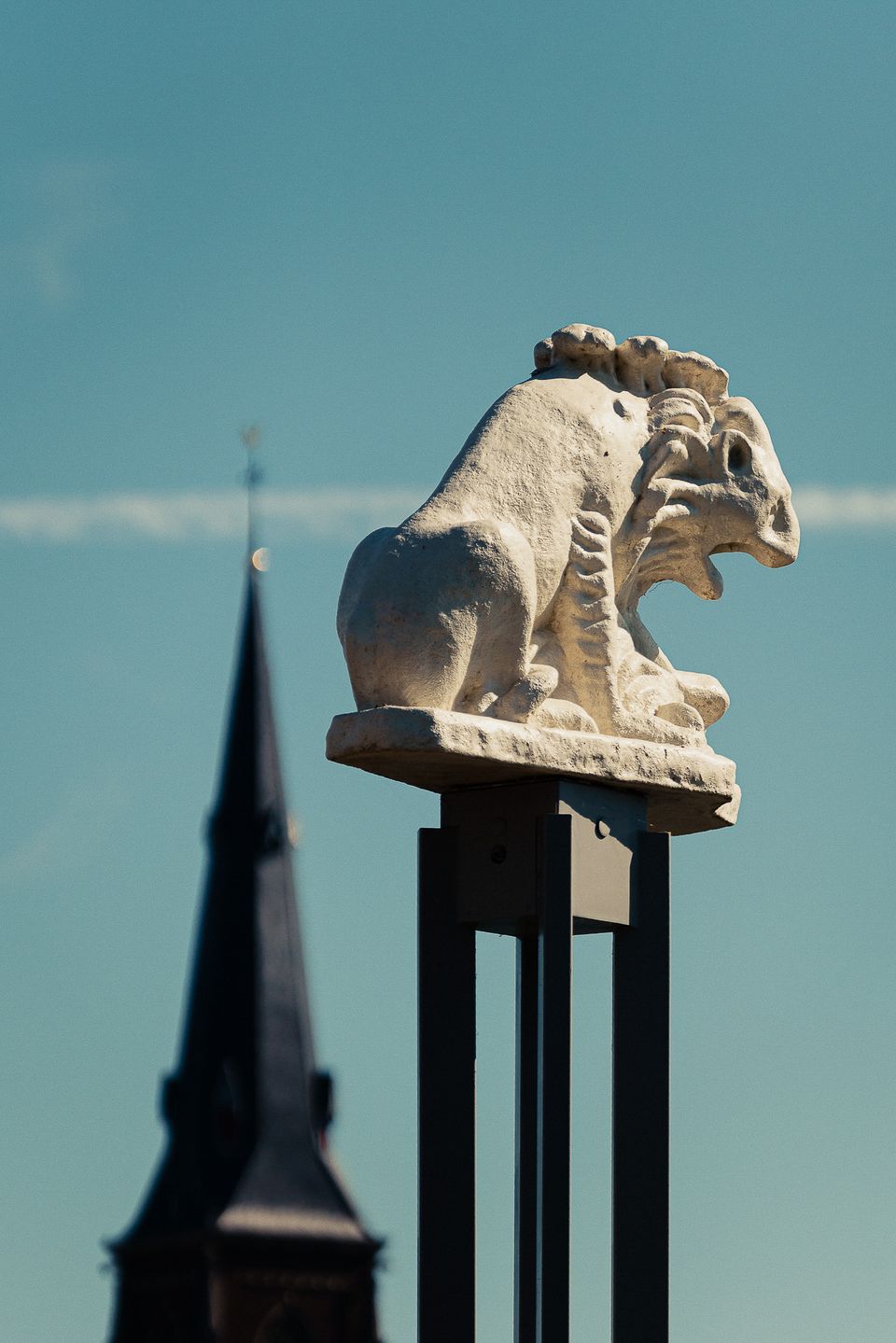
Mosa Trajectum, Maastricht. In various places, sculptures remind you of the city’s Roman past. Upon their arrival, the Romans built a bridge across the Meuse. On that spot, just south of the Sint Servaasbrug, you can now see the artwork ‘Pons Mosae’ by ceramicist Jo Schoenmakers (1957) and architect Arno Meijs (1941). A tall steel column, crowned by a lion. The sculpture is a replica of the original Roman lion found here in the ‘ Meuse ’. Further on in the city centre, you’ll find the square known as ‘Op de Thermen’. Many people associate thermal baths with Heerlen, but Maastricht also had a Roman bathhouse. Tiles in the square’s paving mark the outlines of the original structure. But even outside the city centre, in the Daalhof neighbourhood, you’ll find a reference to the area’s former inhabitants. On the site where an important Roman road once ran from Tongeren to Maastricht, there is now a footpath called Romeinsebaan. On either side of this, the Tongeren sculptor Raf Verjans (1935–2022) installed a relief featuring imprints of human figures. This pair of monuments was a gift from the city of Tongeren to celebrate their shared Roman history.

A mission from above
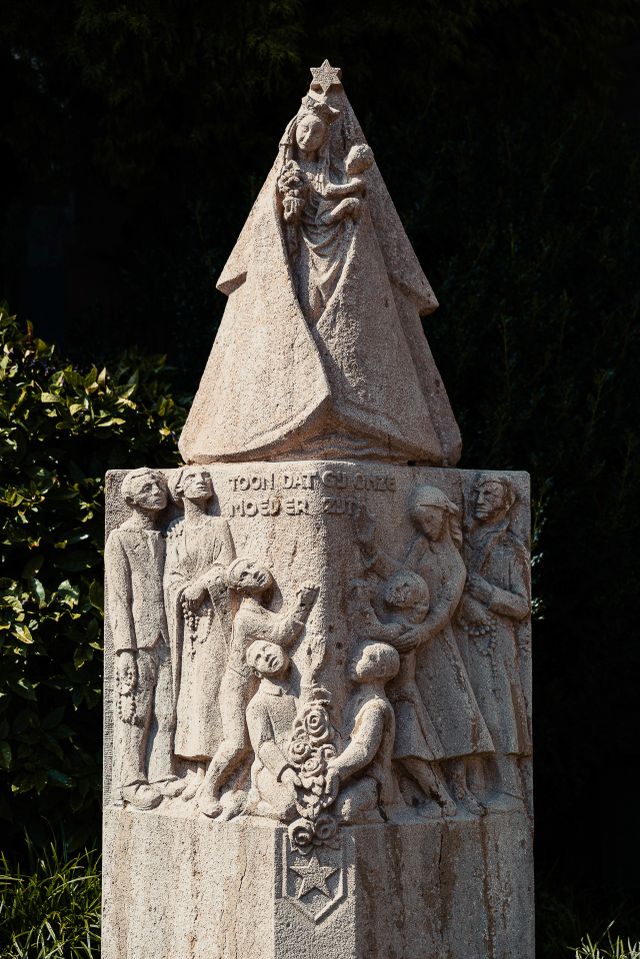
Until themid-20th century, the church was the principal patron and source of inspiration for the visual arts, here too. The patron saint of Maastricht is Saint Servatius, whose tomb has been drawing pilgrims to the city for centuries. In, on and around his basilica on the Vrijthof, you’ll find the most magnificent portals, fountains and statues. The largest depiction of Servatius himself can be seen halfway across the Sint Servaasbrug. The three-metre-high sculpture by Maastricht-born Charles Vos (1888–1954) adorns one of the bridge piers. Another key saint in the city is Our Lady, Star of the Sea. You can light a candle before her15th-century statue of the Virgin Mary in the chapel of the basilica on Onze Lieve Vrouweplein. Looking for a more contemplative experience? From the chapel, follow the ‘Bidweg’, a five-century-old devotional route through the city centre. The route was marked out in the middle of the last century with some fifteen statues and commemorative plaques depicting the Virgin Mary.

A skyline full of chimneys
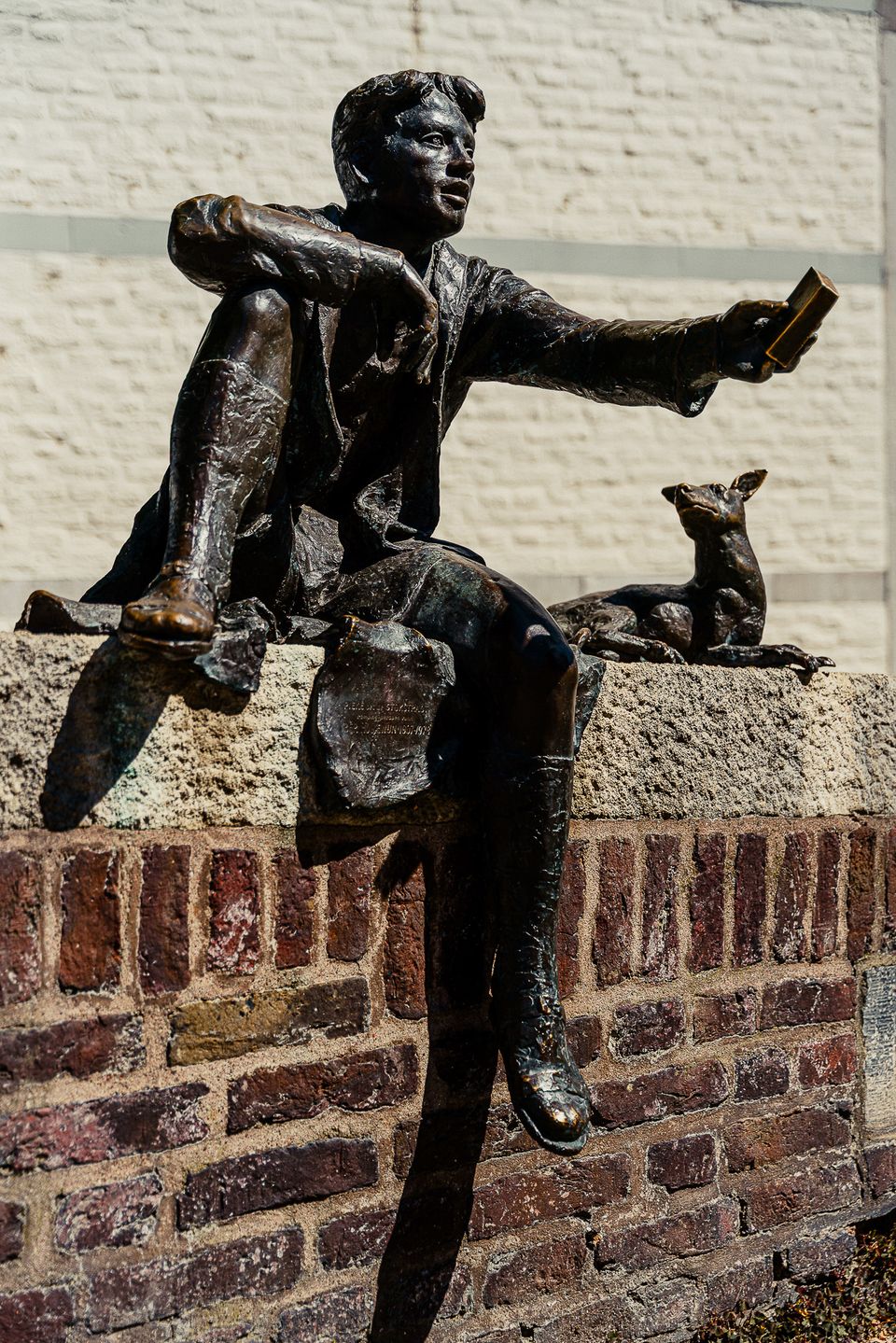
Where church towers once dominated the city’s skyline, more and more factory buildings began to spring up in themid-19th century. Maastricht was the Netherlands’ first industrial city, and its most important industrialist was Petrus Regout (1801–1878). A bronze statue of the entrepreneur was erected in front of his former Sphinx factories on Boschstraat in the late 1960s. A controversial figure: in Maastricht, Regout was synonymous with the exploitation of workers. That dark side of the flourishing industry was particularly evident in the Stokstraat neighbourhood. Workers from the pottery factories lived there with large families, crammed into small, damp one-room flats. The neighbourhood has since become a luxury shopping district, where the bronze statue of the fictional Pieke oet de Stokstraot still serves as a reminder of life in this working-class neighbourhood in the 1930s. Elsewhere in the city, in the courtyard garden of a block of flats in the Sphinx Quarter, you’ll find the work *Siamese Sphinx* by the artist duo * Les Deux Garçons*. In this sculpture, the creators incorporated the faces of two English engravers who worked for Regout’s Sphinx factories around 1880.

Promoting art
With its schemes to promote the arts, the Netherlands occupied a unique position within Europe. It was Victor de Stuers, a native of Maastricht, who, as the ‘first arts officer in the Netherlands’ in the late19th century, devised the percentage scheme: 1 per cent to 2 per cent of the construction costs of government buildings had to be allocated to art. The Ministry of Education, Culture and Science eventually introduced this policy in 1951. The business community also encouraged art in staff canteens, department shops, offices and on factory façades. Maastricht had various municipal schemes in place. This led to closer collaboration between architects and artists. Funding is now mainly provided through grants.
Influences from elsewhere
From the 1960s and 1970s onwards, the cultural climate in Maastricht began to change. Progressive artists shook the sleepy art institutions and academies out of their slumber. The approach to art in public spaces also changed: from figurative to conceptual and abstract. New works were no longer aimed at decorating the city, but sought to convey an idea. International art movements made their appearance. This breath of fresh air brought with it works by local and international artists. For example, in front of the Tax Office you can see *Overhand Knot* (1989) by the Japanese-American artist Shinkichi Tajiri; at the ‘ Bonnefanten ’, *Long Pyramid* (1990) by the American Sol LeWitt, and on Parkweg, Lijn in beweging (1997) by the Limburg sculptor Piet Killaars. Works by the latter can be seen in several locations across the city. For example, five-metre-high vertical elements stand at the entrance to the MECC conference centre. Several of his abstract artworks have even been installed in and around the Provincial Government of Limburg .
Crossroads of Europe
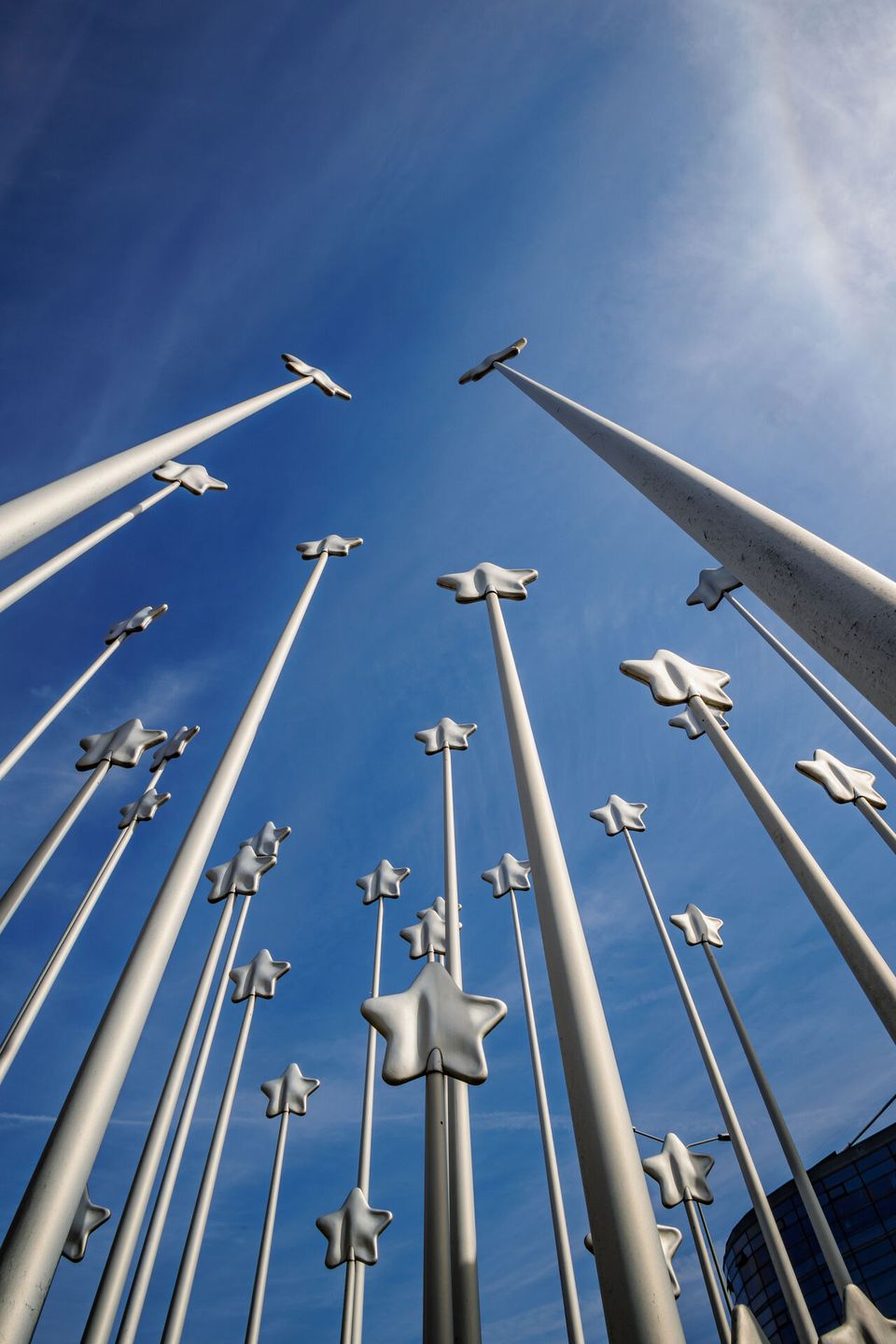
Due to its location at the crossroads of the Netherlands, Belgium and Germany, the city was the perfect venue for this. On the tenth anniversary of the treaty, the artwork was Stars of Europe was unveiled. The Italian artist Maura Biava (1970) designed a forest of slender aluminium poles, atop which stars spin in the wind. There are 35 in total: 12 large stars represent the first 12 Member States, whilst the 23 smaller ones stand for new and future members. Engraved on the poles are quotations about European integration by famous writers, philosophers, journalists and politicians. A little further on in the Céramique district, you’ll find another reference to Maastricht’s role in European history. At Plein92 – what’s in a name? – you’ll find dozens of bronze tiles by the Limburg artist Jos Hermans (1930–2017) set into the paving. They alternately display the euro symbol or the year 1992.
City of Art
Within Limburg, Maastricht holds a special place when it comes to the visual arts. There are, of course, art institutions such as Bonnefanten, Marres House for Contemporary Culture, Fotomuseum aan het Vrijthof, Bureau Europa, the Maastricht Ateliers Foundation and the many renowned galleries. But perhaps even more important are the highly regarded courses at the Academy of Fine Arts (1823) and the Maastricht Centre for Advanced Studies in the Arts ( Jan van Eyck Academie , 1948), the post-graduate institute. Many alumni have created works in public spaces, including in recent years. For example, the Maastricht-based artist Charlotte Lagro spent four years collecting traffic bollards and used them to create her work *Zachtloper* (2023). This metal pergola can be found on the square in front of Lumière and the ‘ Muziekgieterij ’. In the same year, the sculpture group ‘Burgers van Maastricht ’ by the Landgraaf-based ‘ Les Deux Garçons’ was unveiled on Herdenkingsplein . The duo installed the three four-metre-tall white nude figures in front of the entrance to the Academy of Fine Art to mark the institution’s 200th anniversary.


From commotion to tradition
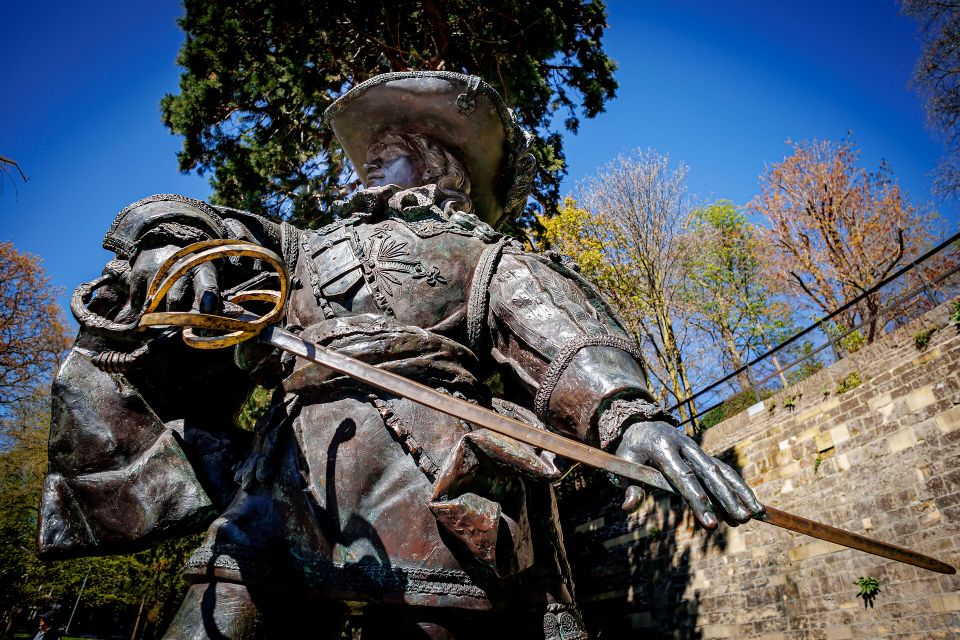
From sculptures to commemorative plaques and from statues of saints to fountains: the City of Maastricht boasts hundreds of works of art in public spaces. Sometimes their installation was met with resistance regarding location, design or cost. But despite the occasional controversy, the people of Maastricht – and often visitors too – have grown fond of the many statues. This is also evident from the traditions that have developed around some of them. For instance, people gather at the Limburg Liberation Monument on Koningsplein during the annual Remembrance Day ceremony. In Aldenhof Park, a wreath is always laid at the feet of the bronze musketeer d’Artagnan on the anniversary of his death, 25 June. On Carnival Saturday, the city prince places a wreath of vegetables around the shoulders of ’t Mooswief on the Markt, whilst on the following Tuesday, dozens of brass bands gather on the Vrijthof near the sculpture group De Zaate Herremenie.
Fancy exploring on your own?
Would you like to find out more and, above all, see for yourself the art in Maastricht’s public spaces? The ‘Beeldschoon Maastricht’ walking guide is available to buy at the Maastricht Store. With this booklet, you can set off on your own, whenever you like. It takes you past 25 works of art that tell you more about Maastricht’s history, culture and the artists behind them.
View the brochure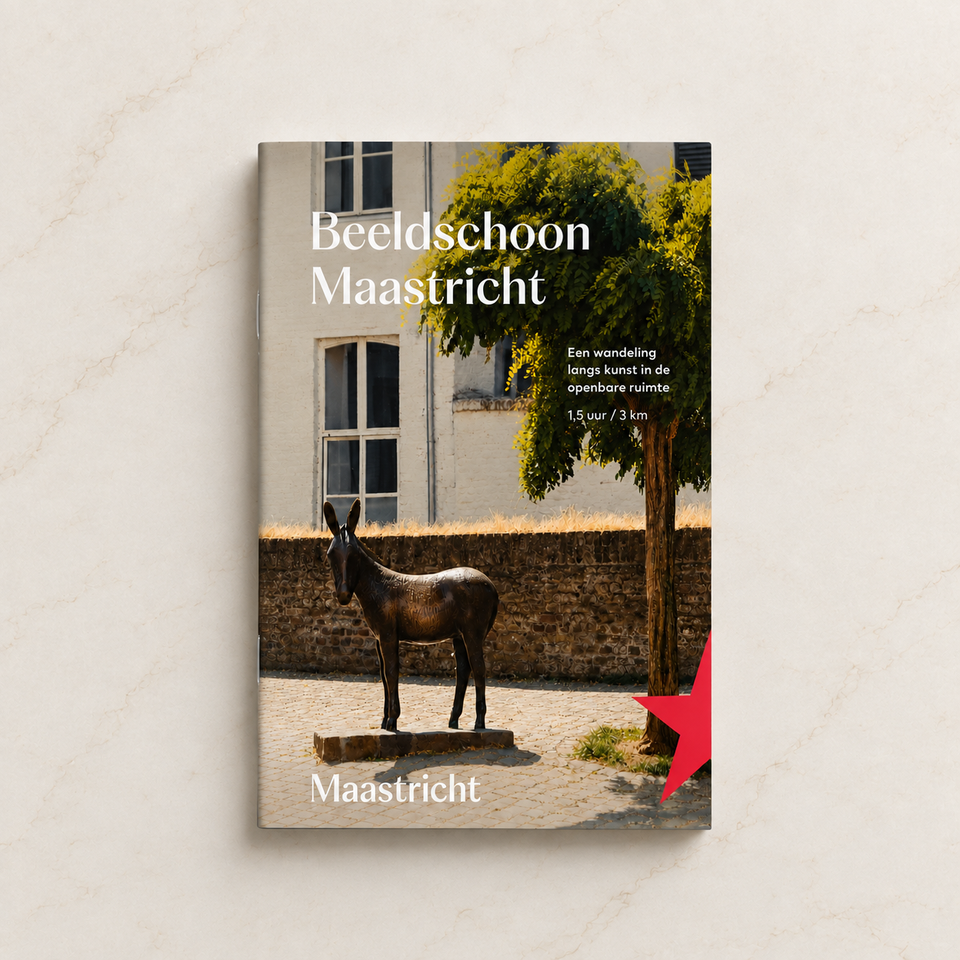
View works of art - in public spaces
-
The Ship’s Figurehead
The Ship’s Figurehead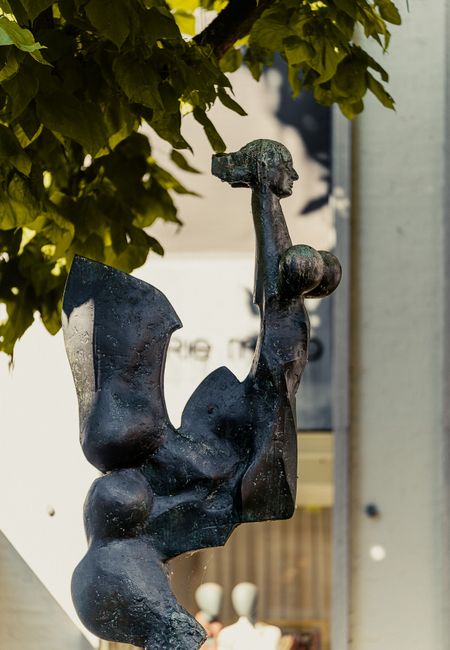
This bronze figure keeps the memory of the Meuse river boatmen of yesteryear alive. At that time, they lived mainly in the Stokstraat district.
-
Joy of life
Joy of life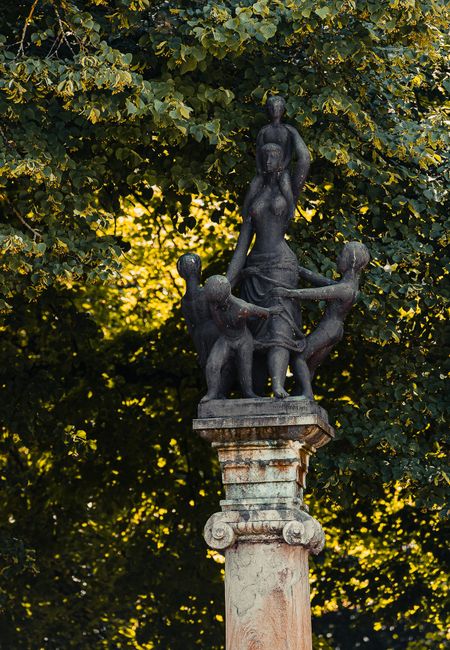
In the idyllic Jeker Quarter, this lively family towers high above the tables and chairs on the terrace.
-
"Human Rights" mural
"Human Rights" mural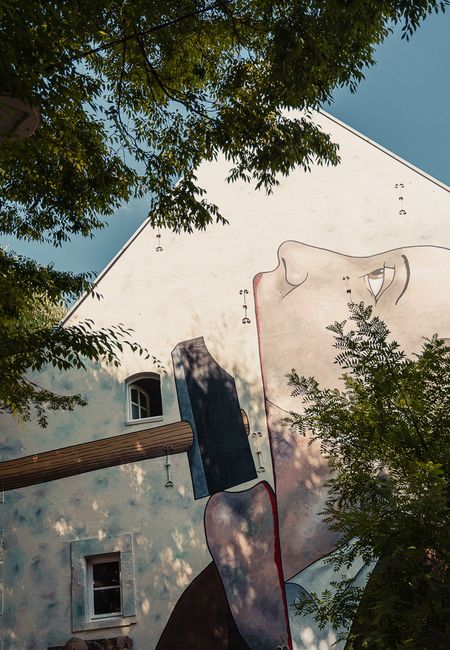
One of Maastricht’s oldest murals. The artwork commemorates the Universal Declaration of Human Rights and its enduring significance...
-
Mestreechter Geis
Mestreechter Geis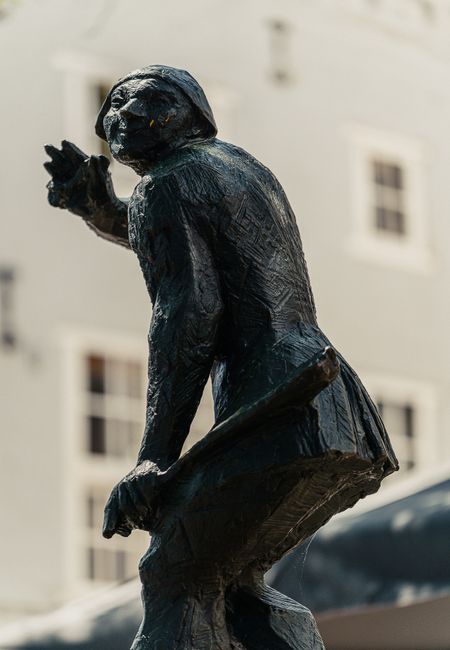
One of Maastricht’s most famous landmarks. The bronze statue symbolises the Maastricht way of life and tells the story behind...
-
Our Lady, Holy Mother of God
Our Lady, Holy Mother of God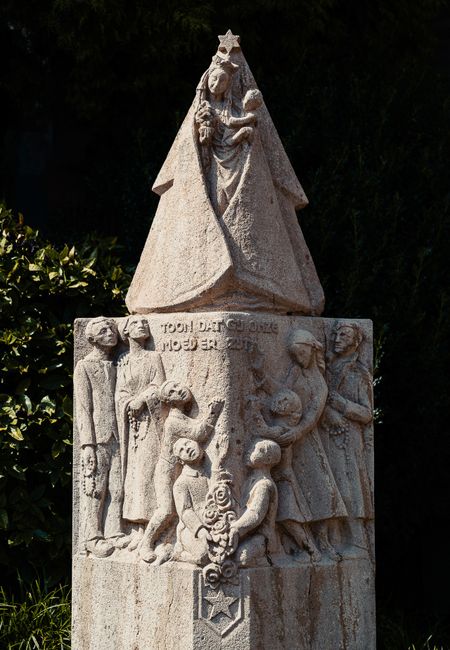
This statue of the Virgin Mary by Charles Vos, dating from 1948, forms part of Maastricht’s historic pilgrimage route.
-
Passage to Wisdom
Passage to Wisdom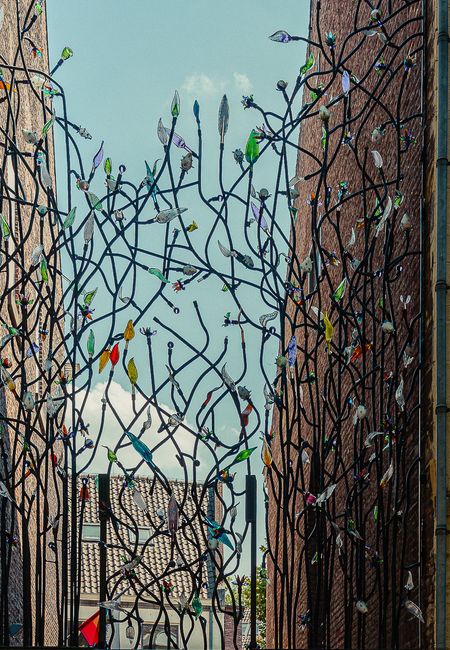
This is a work of art by Bořek Šípek that forms the entrance to Maastricht University Library.
-
De Zaate Herremenie
De Zaate Herremenie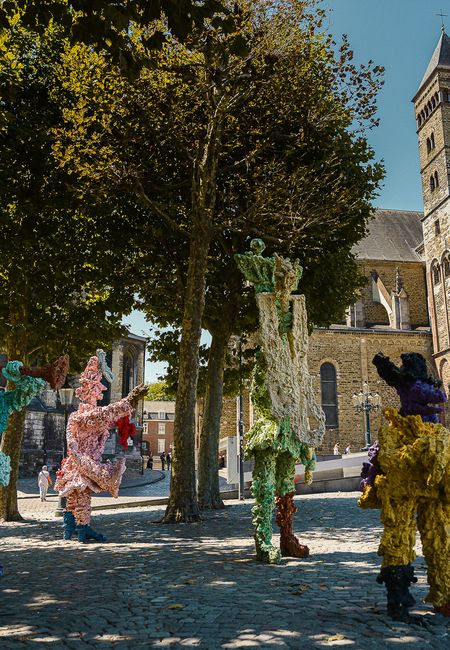
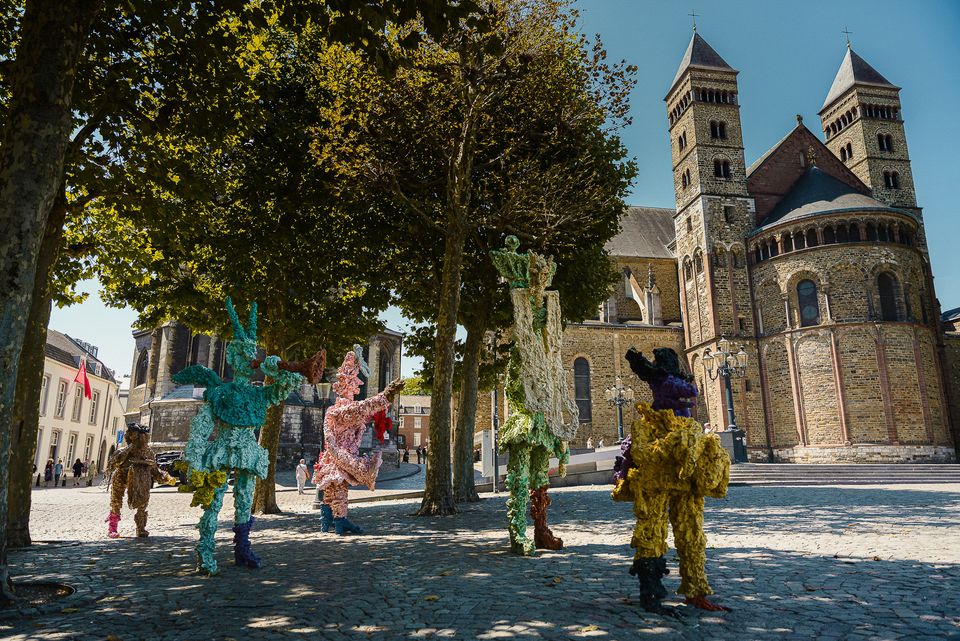
The musicians of this colourful brass band pay tribute to the ‘zaate hermeniekes’ who make Maastricht’s street carnival the celebration it is.
-
Statue of St Servatius
Statue of St Servatius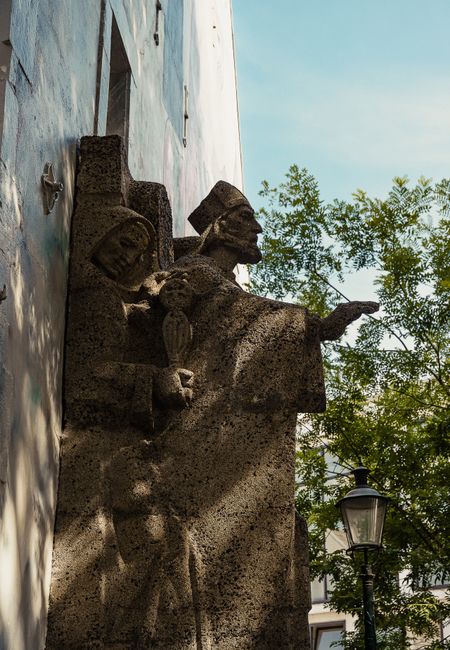
Saint Servatius is depicted in bishop’s robes with a crozier and a dragon, as a reference to his religious significance.