
Statue of St Servatius
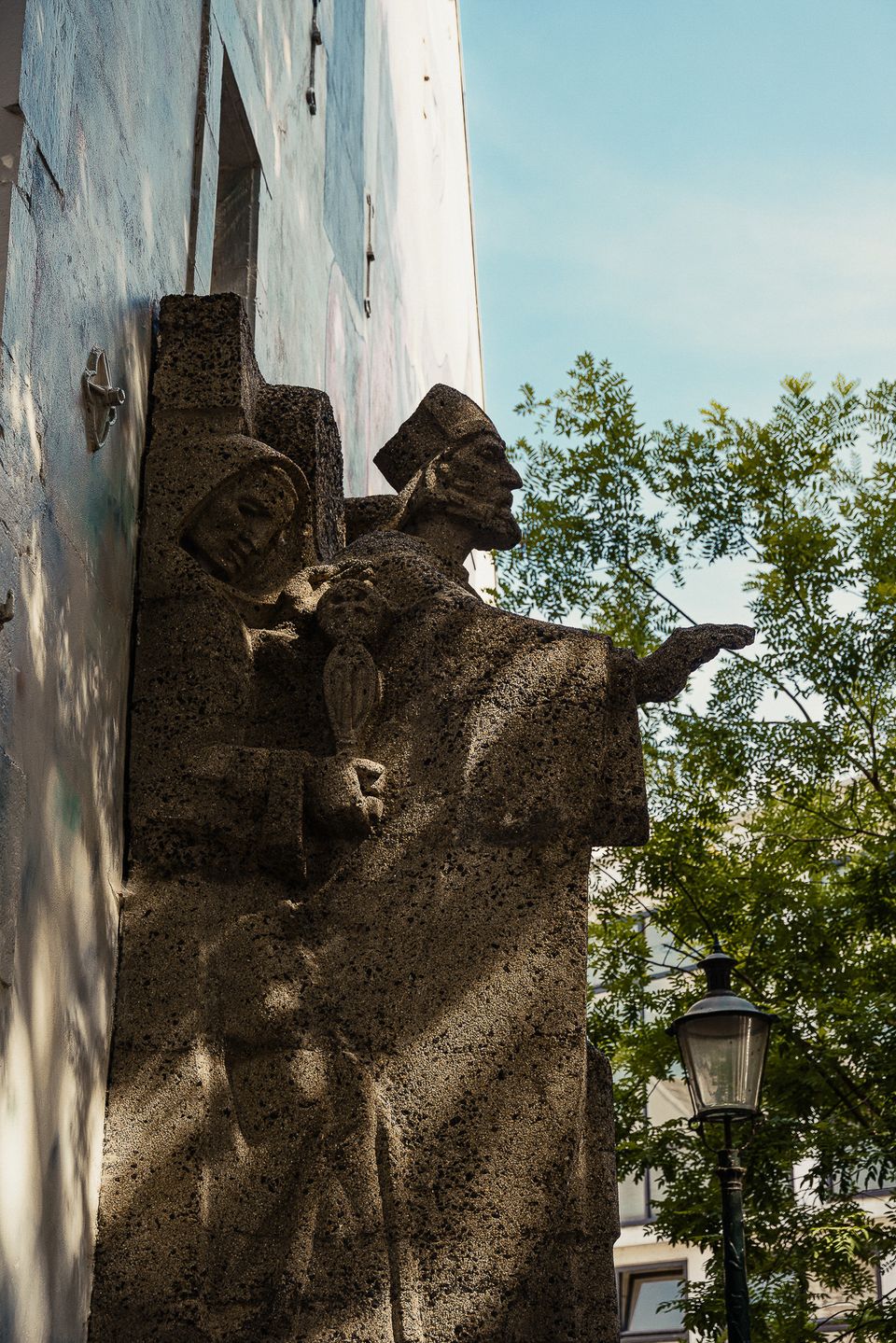
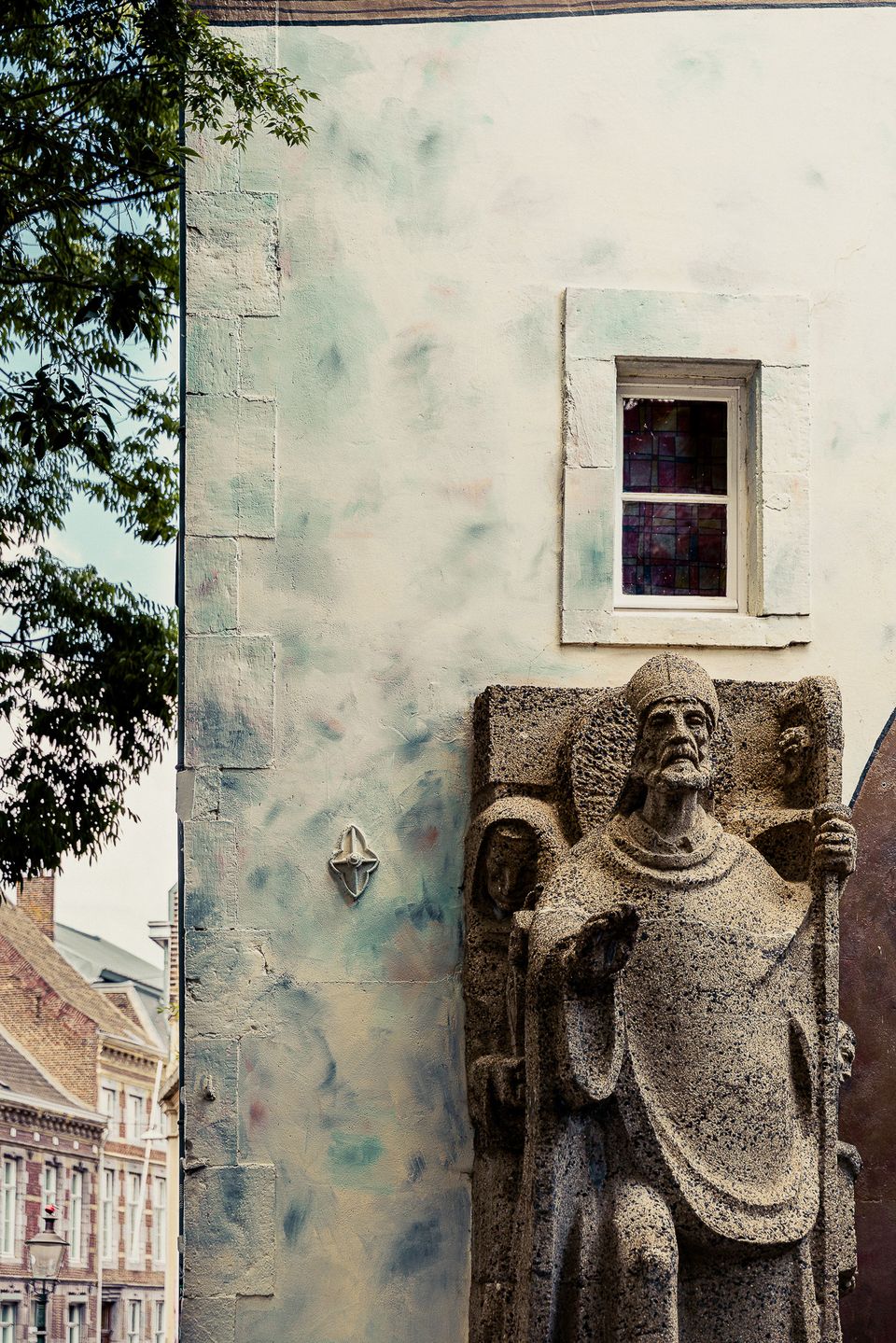
Saint Servatius is depicted in bishop’s robes with a crozier and a dragon, as a reference to his religious significance.

Meet Saint Servatius, the city’s patron saint.
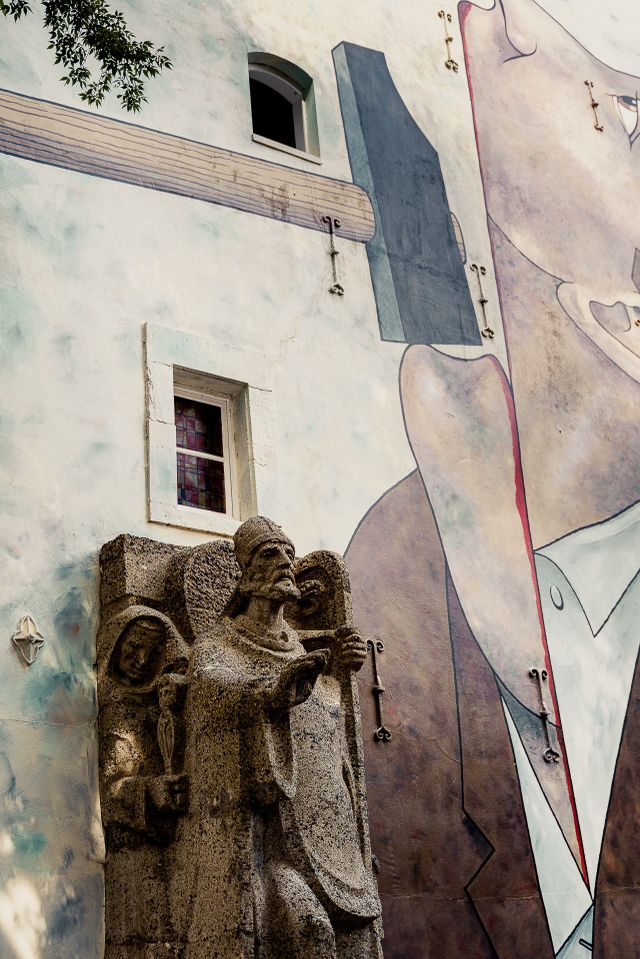
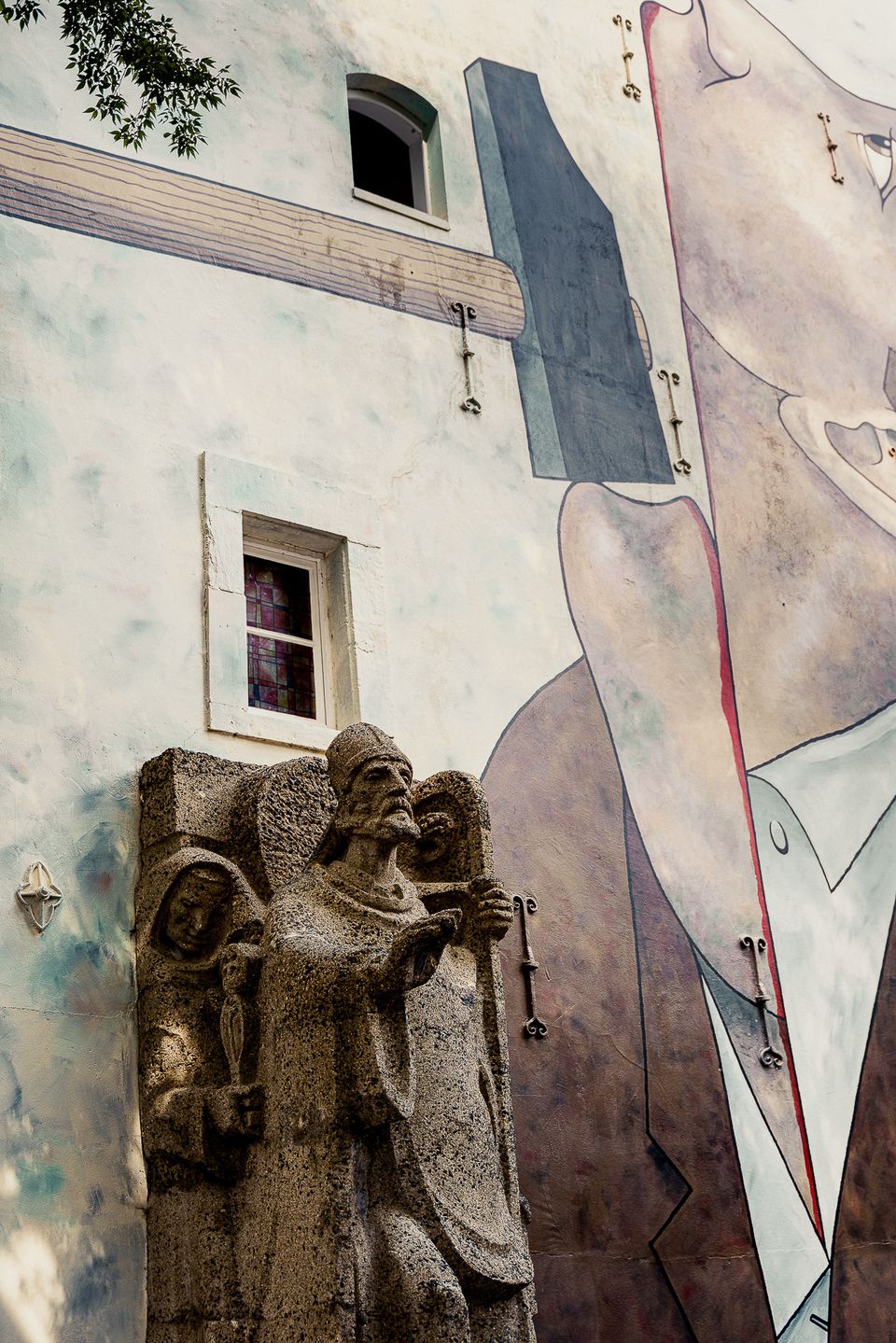
Beneath the tall trees and next to one of Maastricht’s oldest murals, Saint Servatius reaches out his hand to you. The patron saint is clad in full bishop’s regalia and wears a mitre on his head. In his hand he holds a staff with which he pierces the head of a dragon, symbolising heresy. An altar boy holding a key stands to Servatius’s right; on the other side, behind the saint, you can see a bearer of Maastricht’s coat of arms.
Saint Servatius looks out over the Tongerseweg towards Tongeren in Belgium, where he had previously served as bishop. He fled to Maastricht, taking his bishop’s seat with him.
About the artist
The Limburg sculptorSjef Eijmael (1921–2007) created this sculpture in 1959 on commission from the Servatius Housing Association. He studied at the School of Applied Arts in Maastricht, where he was taught by Charles Vos. He went on to study further at the Rijksacademie van Beeldende Kunsten in Amsterdam. From 1944 onwards, Eijmael lived and worked in Maastricht, where several of his other sculptures can still be seen in public spaces. In 1986, he moved to Voeren in Belgian Limburg.
What is there to see?
Sjef Eijmael carved the statue from concrete. It stands on a sandstone plinth. On the façade against which Saint Servatius rests, you can see a large mural entitled ‘Vigilance against human rights violations’. This design, depicting a man being silenced, was created by the French artist Roland Topor (1938–1997) for an Amnesty International poster. In 1988, forty years after the adoption of the Universal Declaration of Human Rights by the United Nations, three artists from Limburg turned it into this mural.
Fun fact
This statue of Saint Servatius is a replica of its twin, which is situated in the largest pier on the south side of the Saint Servatius Bridge. Between 1932 and 1933, the bridge – then still known as the Maasbrug – underwent extensive renovation. The refurbished bridge was named after the Chapter of Saint Servatius, which had owned the bridge for the first five centuries. Sculptor Charles Vos (1888–1954) was commissioned to create a statue of the bridge’s namesake. With his outstretched hand, Saint Servatius has now been blessing the ‘ Meuse ’ and its passengers for almost 100 years.
-
You’ll find the statue of Saint Servatius in the Jeker Quarter
Location
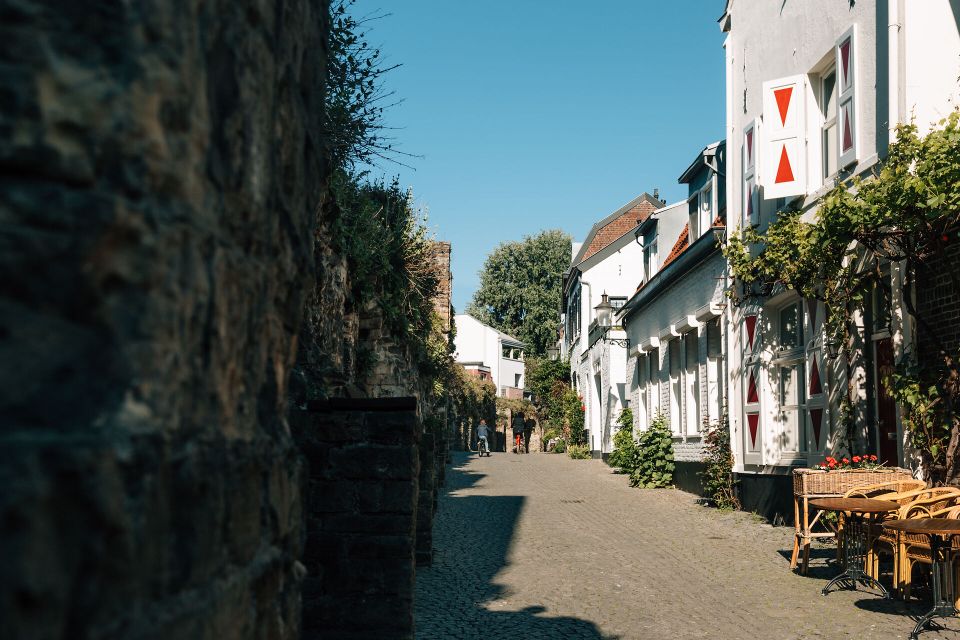
In the Jeker Quarter, you’ll find atmospheric restaurants and cafés with the best outdoor terraces, the historic city wall, a bakery with a watermill where flour is ground for the tastiest vlaai, and, if you’re lucky, live music on the street.
Discover the surroundings
Tips in the area
Skip map elements