
Mercurius
Meet the mythical Mercury: this patron of commerce watches the strolling locals and visitors from his pedestal.
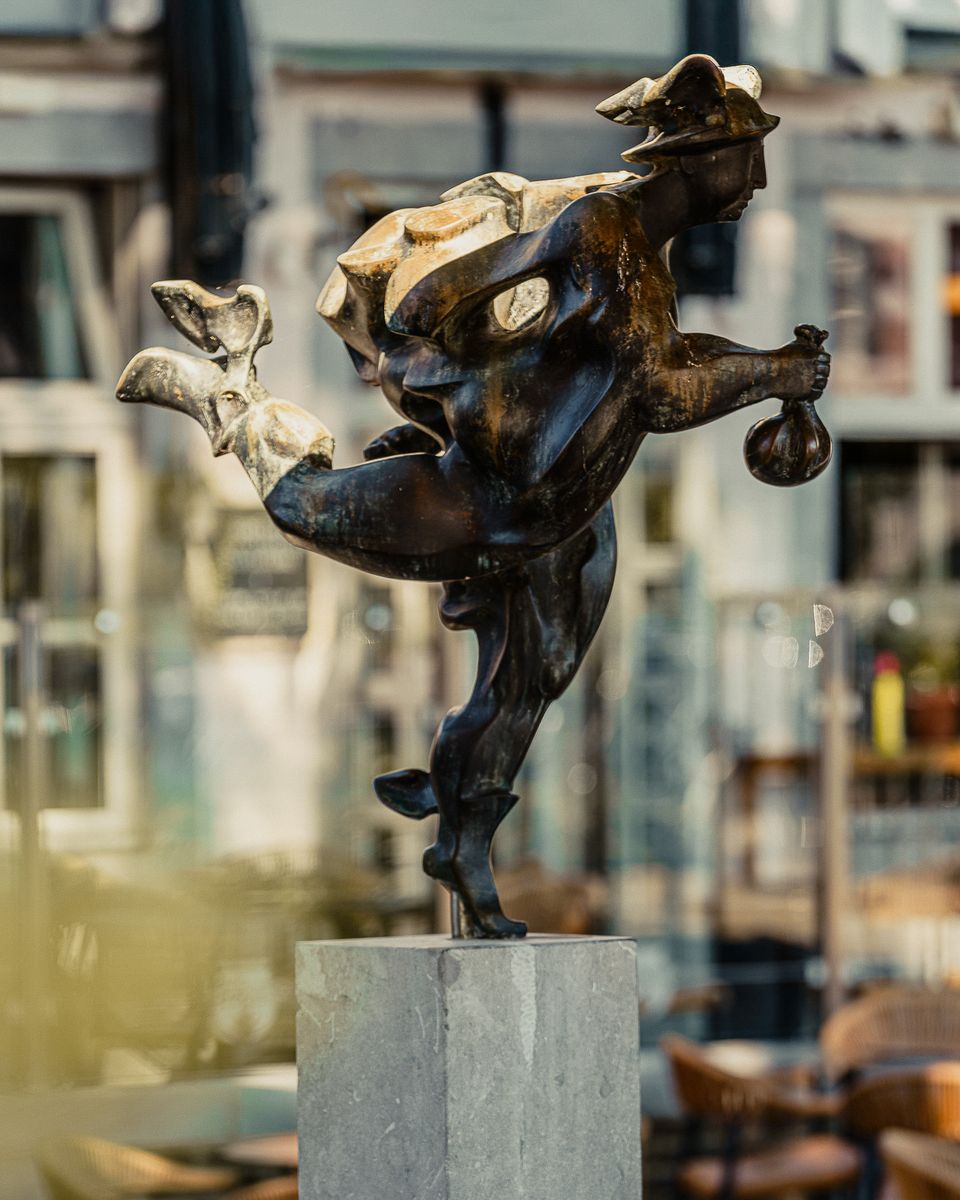

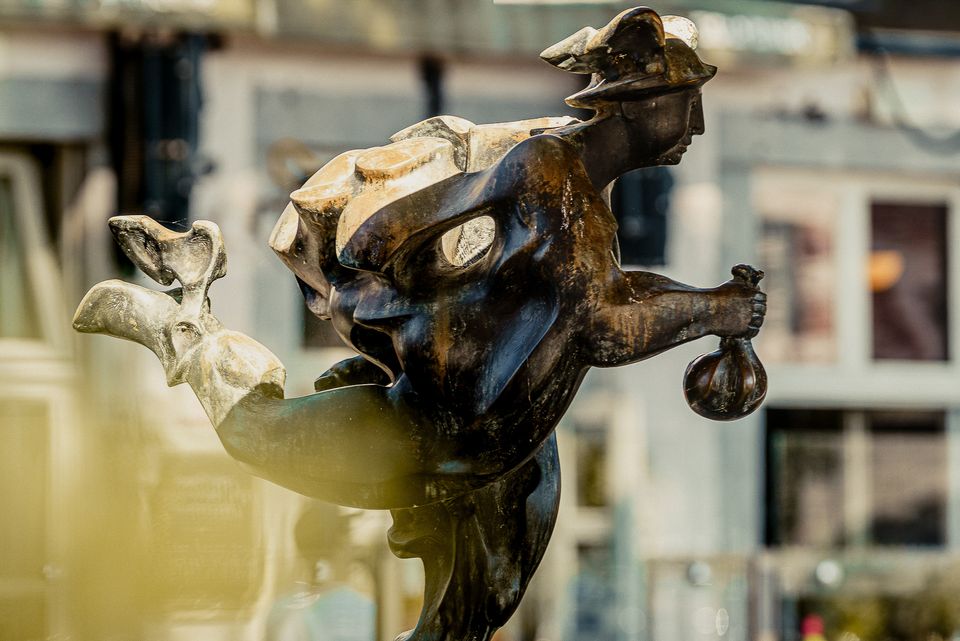
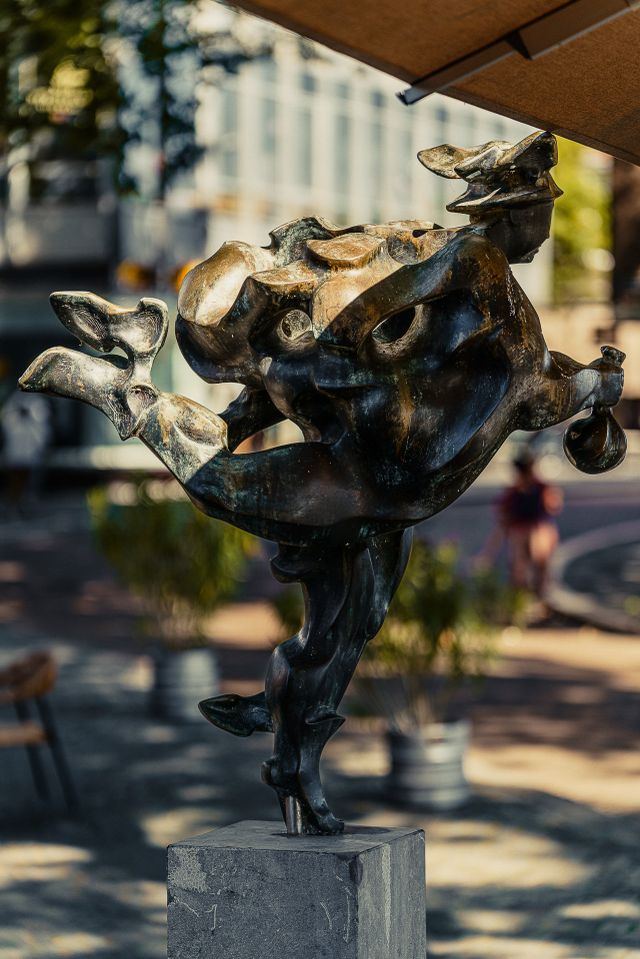
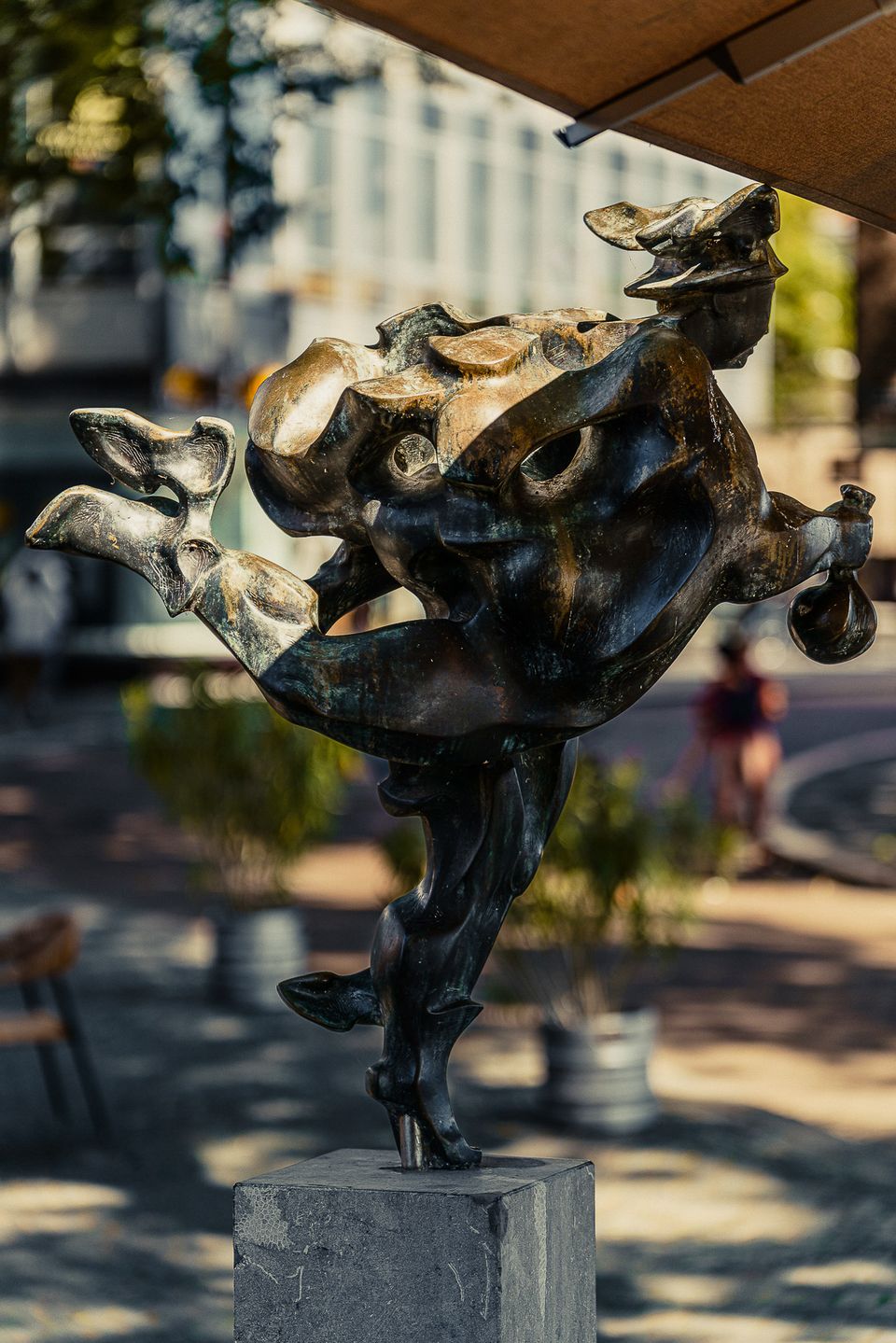
To mark the Chamber of Commerce’s move to ‘ Het Bat ’, this bronze statue of Mercury was erected in 1982. A most fitting figure: Mercury is the Roman god of trade and merchants. Artist Fons Bemelmans (1938) depicted him in full flight. With wings on his helmet and shoes, a fluttering cape and a purse in his outstretched hand, he looks towards the ‘ Meuse ’.
The bluestone plinth states that Maastricht’s business community donated Mercurius to the city. The chairman of the Maastricht Chamber of Commerce presented the statue in 1982. Around 10 years after Mercurius was installed, the Chamber of Commerce moved to a different address in the city. In 2011, the organisation left Maastricht altogether. Entrepreneurs can now visit the branch in Roermond.
About the artist
Fons Bemelmans (1938), who was born in Maastricht, began his training as a goldsmith in 1955 at the Maastricht Academy of Applied Arts. He subsequently took courses at the Kölner Werkschulen and the Accademia di Belle Arti di Brera in Milan. Classical themes such as myths and legends frequently feature in his sculptures, etchings and medals.
What is there to see?
The 110cm-high bronze statue of Mercury stands on a blue natural stone plinth of the same height. Around this plinth on the ground lie four stones bearing the names of the companies that donated this statue in 1982. Mercury no longer stands guard at the entrance to the Chamber of Commerce, but watches the strolling passers-by from the edge of the Stokstraat quarter. From here, set off to explore this neighbourhood with its small cafés and luxury boutiques.
Fun fact
’s work can be seen in several places around the city. For example, on Onze Lieve Vrouweplein you’ll find another mythical icon: Jupiter. This supreme god of the sky and thunder towers high above the terrace-goers on his rearing horse. The sculpture refers to the excavation of a Jupiter pillar at this spot, a symbol of Roman power.
-
Mercurius is located in the Stokstraat Quarter
Location

‘Chic and stylish’ – that’s how locals describe the Stokstraat quarter. Historic buildings, numerous listed monuments, exclusive fashion boutiques and cosy restaurants make this quarter a charming part of Maastricht.
Discover the surroundings
Tips in the area
Skip map elements