
Hoge Brug bridge
The Hoge Brug is a modern cycle and pedestrian bridge over the Meuse. Since 2003, it has connected the historic city centre with Céramique.


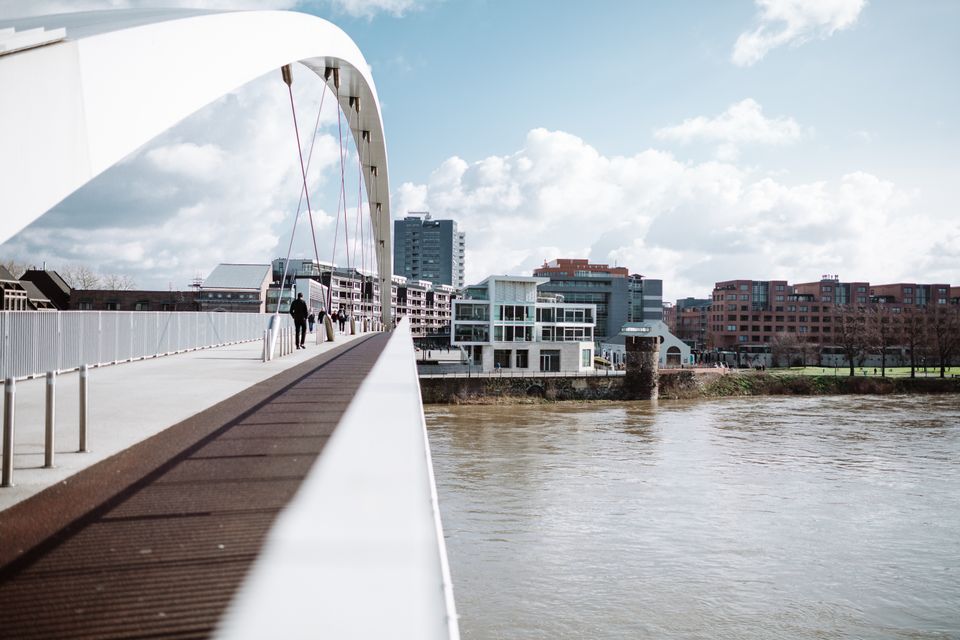
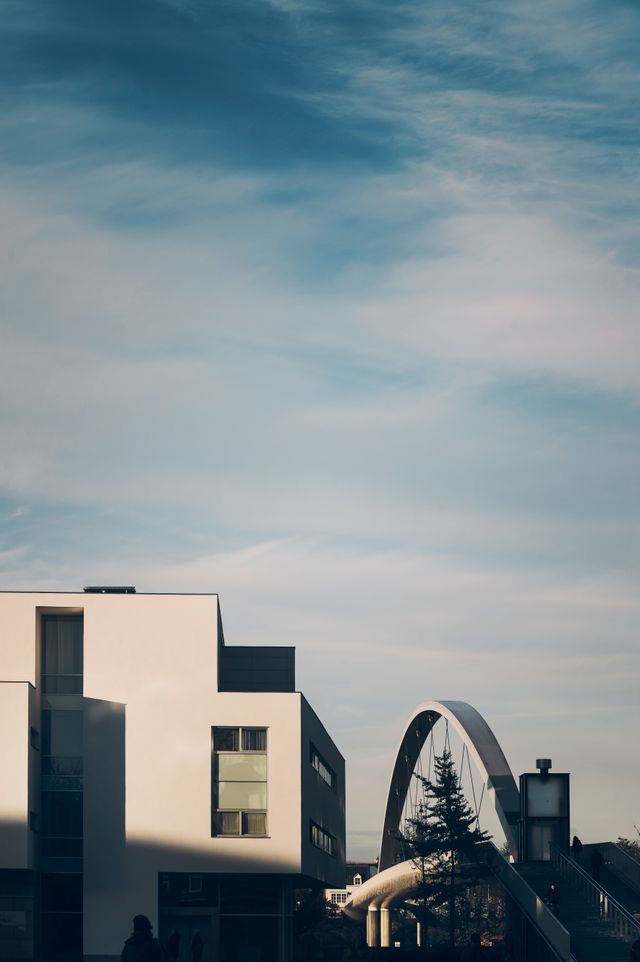
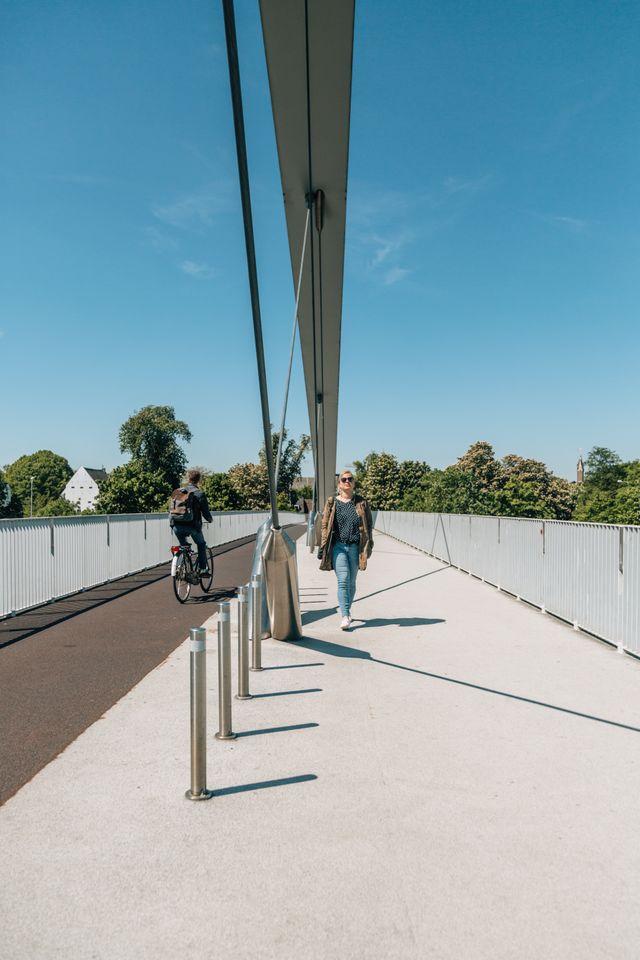
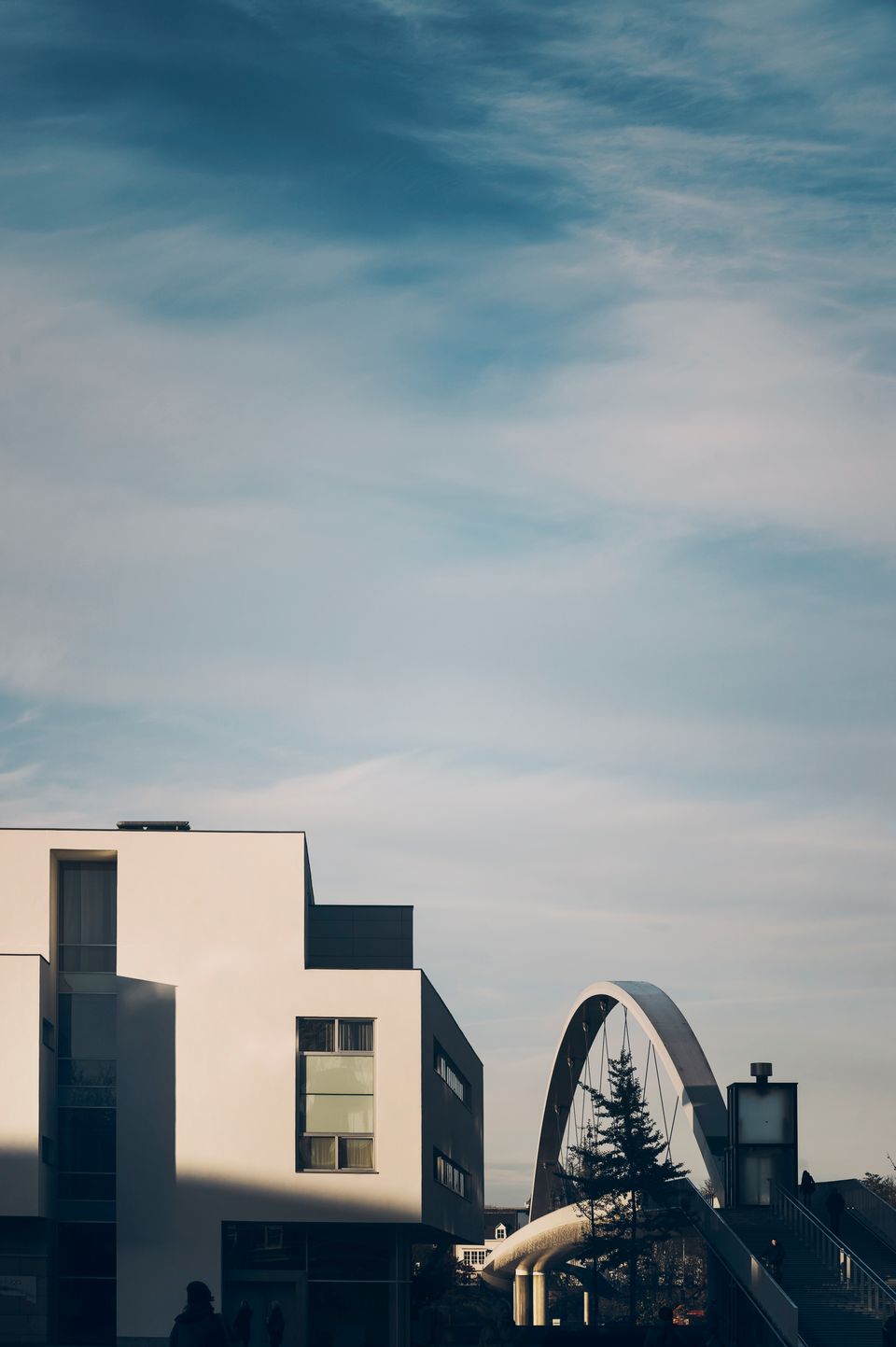
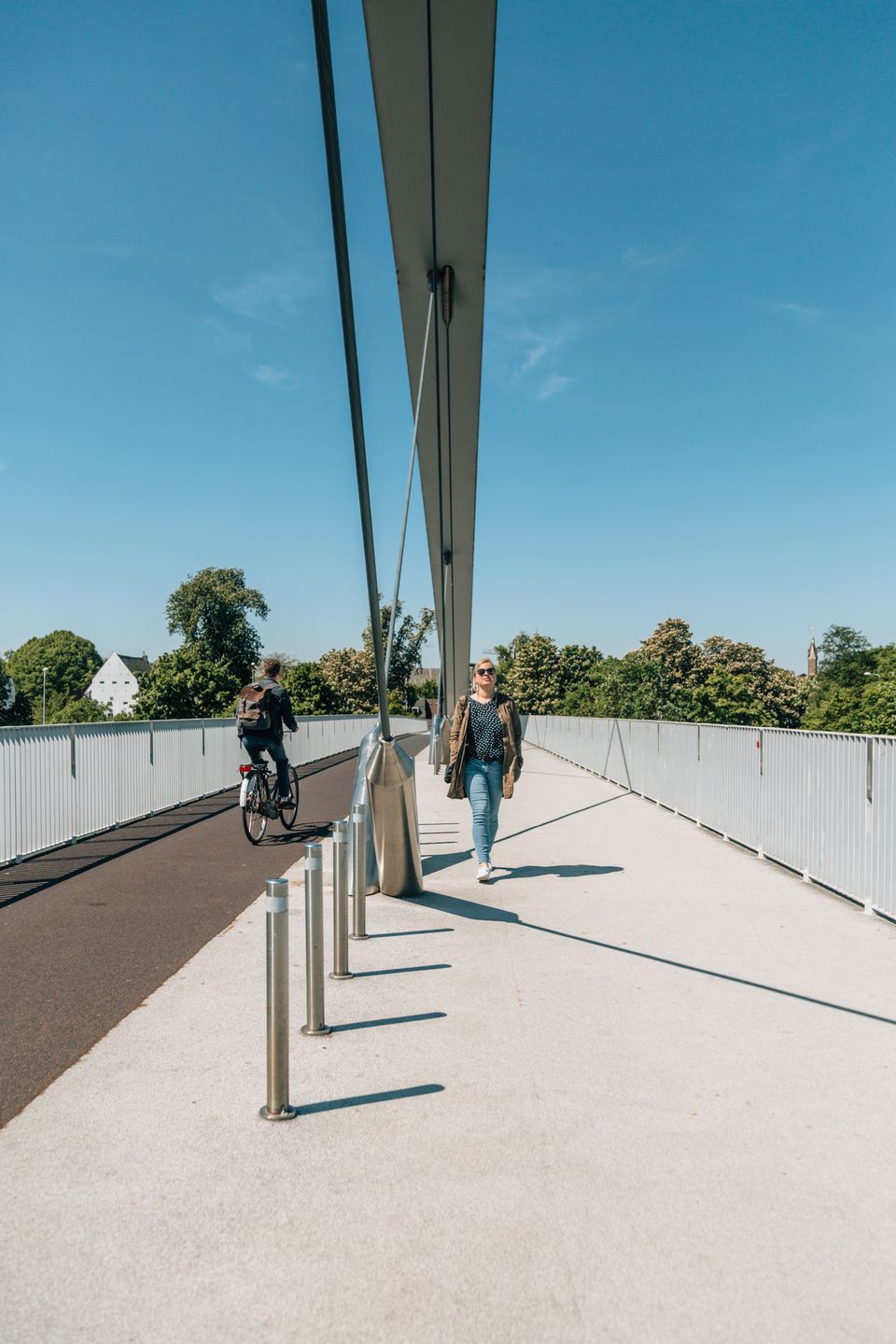
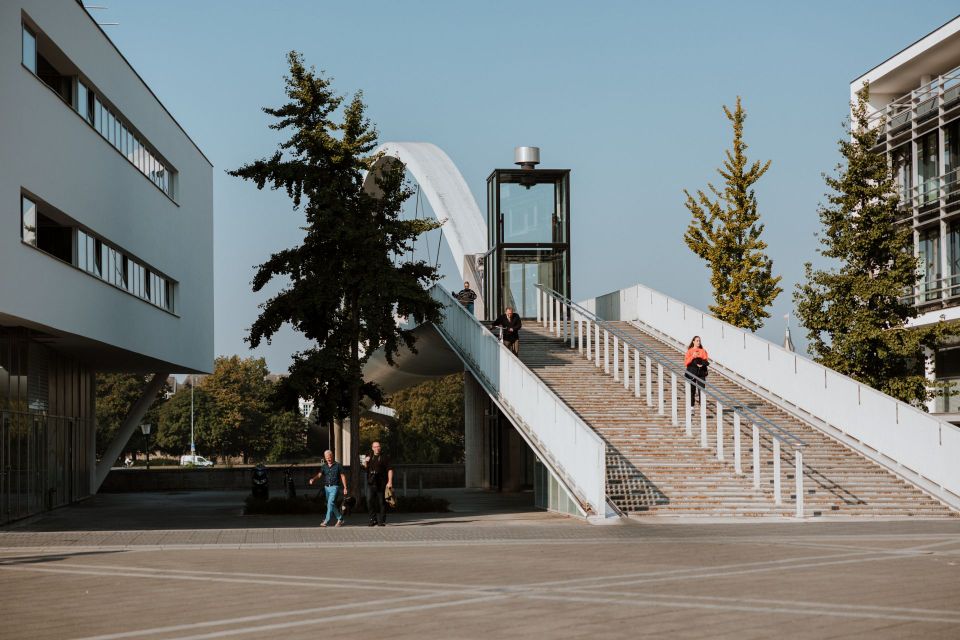
The Hoge Brug (in Maastricht dialect: Hoeg Brögk) is a striking cycle and pedestrian bridge over the Meuse. Since its opening in 2003, the bridge has formed an important link between the historic city centre and the eastern bank of the Meuse. With its slender white arch, the Hoge Brug has become a recognisable feature of Maastricht’s cityscape.
A link between old and new
The Hoge Brug was built as part of the development of the new Céramique district. The bridge made it easier to travel on foot or by bike between the historic city centre and the new residential and cultural district. In this way, the bridge connects not only both banks of the Meuse, but also historic and modern Maastricht.
Architecture above the Meuse
The Hoge Brug was designed by the Liège-based engineering firm René Greisch. Rijkswaterstaat stipulated that shipping must be able to pass unhindered across the Meuse . For this reason, the bridge was not built with piers in the river. Instead, a steel arch structure was chosen, with the bridge deck suspended from diagonal cables.
The bridge is 261 metres long and stands approximately ten metres above the water, allowing even larger ships to pass underneath it without any difficulty. This design gives the Hoge Brug its characteristic, slender silhouette. The bridge received the National Steel Prize in 2004 for its design.
There are lifts and wide staircases at both ends of the bridge, making the crossing accessible to virtually everyone.
What is there to see?
From the Hoge Brug, you can enjoy views over the Meuse and Maastricht’s skyline. To the east, you can see the Bonnefanten and Charles Eyck Park, whilst to the west, the historic city centre comes into view. Thanks to its open design and location above the water, the bridge is also a popular spot for taking photos of the city.
-
Hoge Brug bridge can be found in Céramique
Location
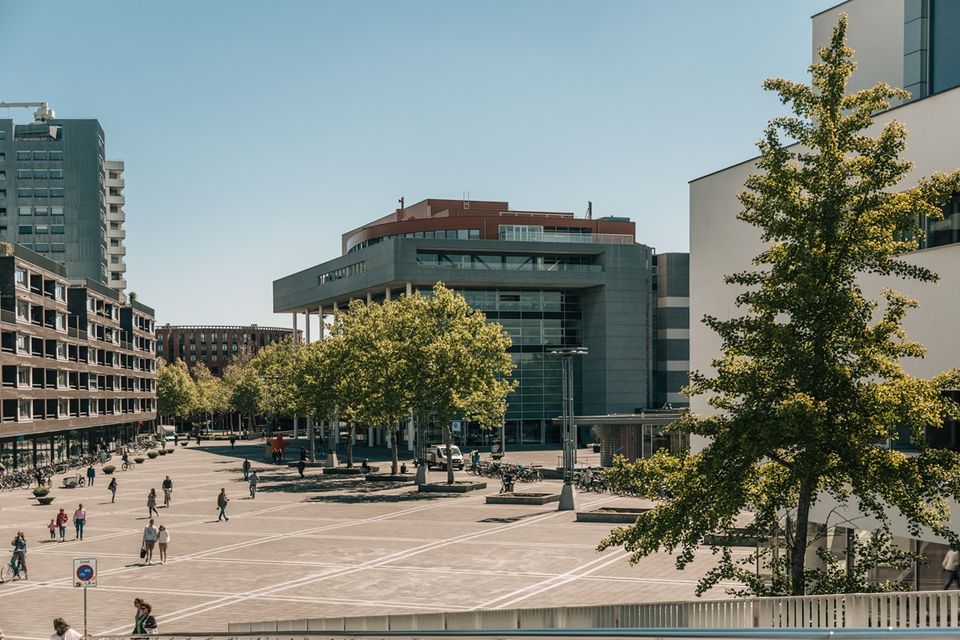
The modern Céramique district is characterised by its distinctive architecture. Maastricht’s industrial past is still very much in evidence here, whilst at the same time you find yourself in the newest and most modern part of the city.
Discover the surroundings
Tips in the area
Skip map elements