
Charles Eyck Park
A green city park on the banks of Meuse in the Céramique district, where nature, modern architecture and the city’s history come together.


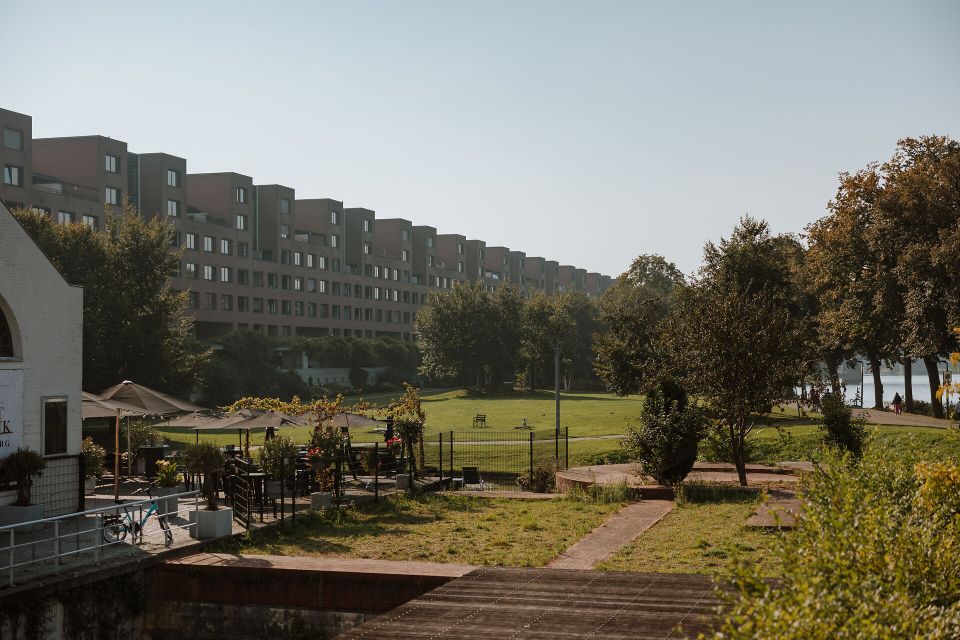
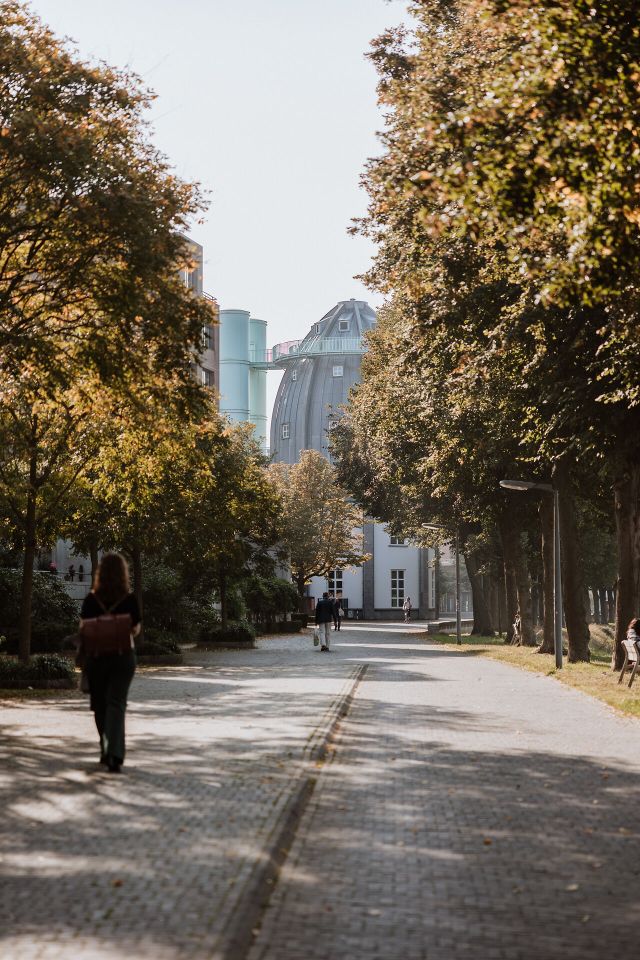
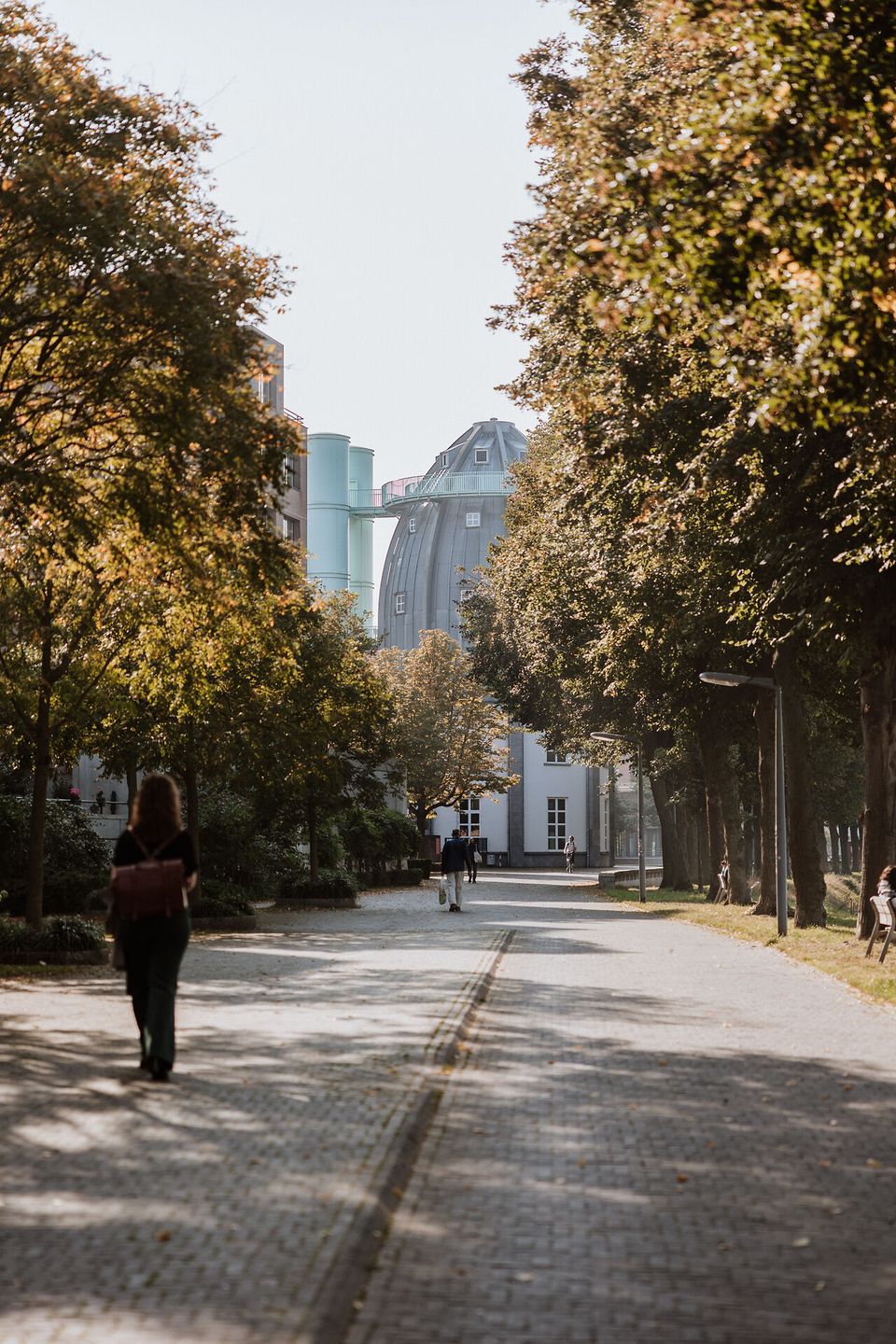
On the eastern bank of the Meuse lies the Charles Eyck Park, a long, narrow park that forms part of the Céramique district. The park offers space for walking, relaxing and enjoying the view over the Meuse . It also demonstrates how a former industrial site has been transformed into a modern urban neighbourhood with a strong focus on green spaces.
From factory site to city park
The Charles Eyckpark was created as part of the redevelopment of the former site of the Société Céramique pottery factory. Architect Jo Coenen drew up an urban masterplan for the new neighbourhood, linking housing, culture, architecture and green spaces.
The park itself was designed by the Swedish landscape architect Gunnar Martinsson. His design forms a green space along the Meuse and connects different parts of the neighbourhood.
History in the landscape
Although the park has a modern feel, there are also references to Maastricht’s history to be found. Remains of the old fortifications of Wyck have been incorporated into the park and its immediate surroundings. In addition, a water feature along the historic fortification wall serves as a reminder of the former city moat.
The park is named after the Limburg artist Charles Eyck (1897–1983), who became famous for his paintings, monumental art and stained-glass windows.
What’s there to see?
Charles Eyck Park consists of wide footpaths, lawns and trees along the Meuse. It is a place where visitors and locals go for a walk, relax or get together for a picnic. Thanks to its location between, amongst others, Centre Céramique and the Bonnefanten , the park also forms a natural link between different parts of the city.
Discover the surroundings
Tips in the area
Skip map elements