
De Zaate Herremenie
The musicians of this colourful brass band pay tribute to the ‘zaate hermeniekes’ who make Maastricht’s street carnival the celebration it is.
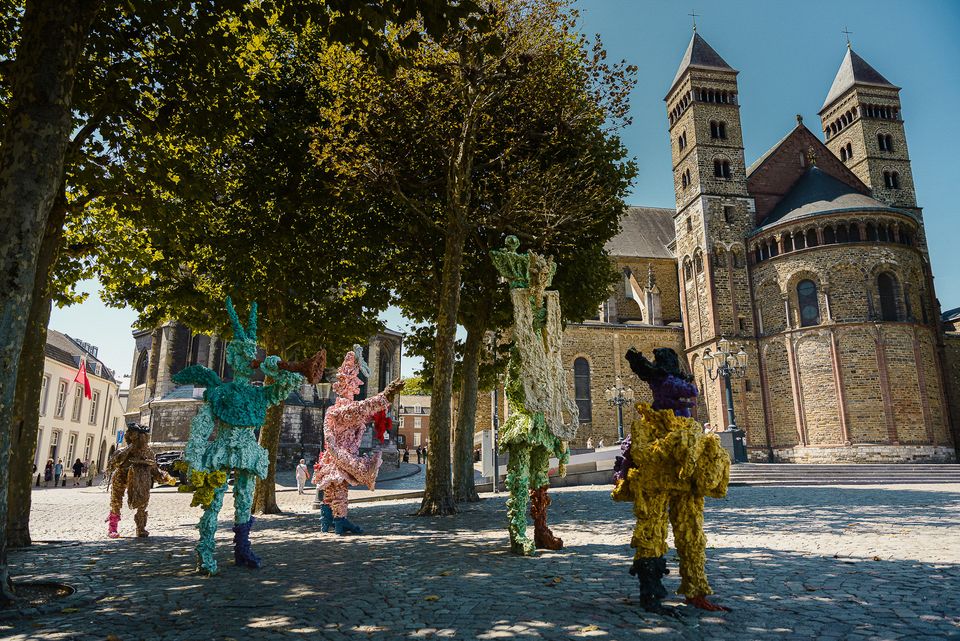

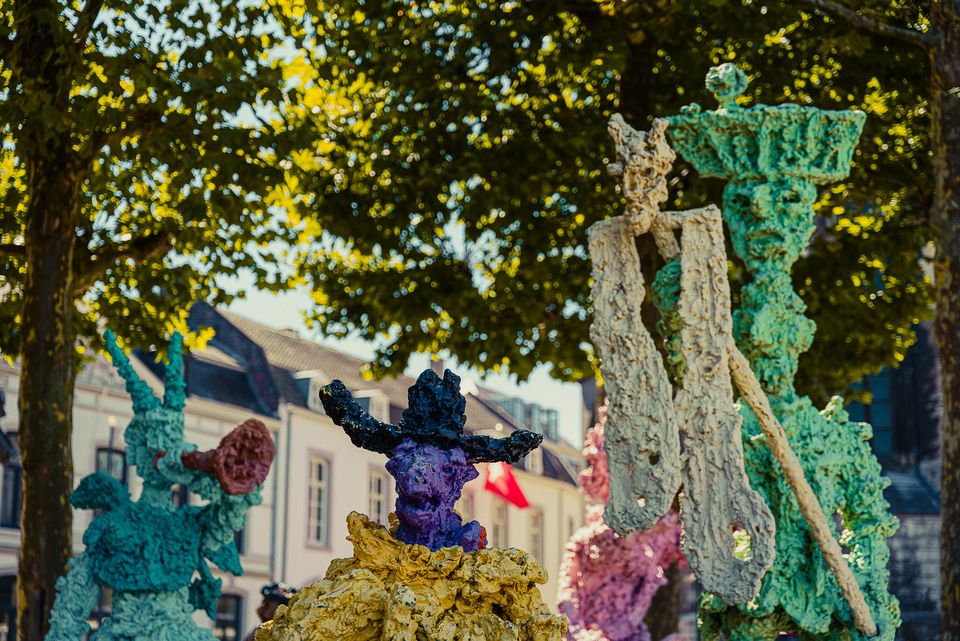
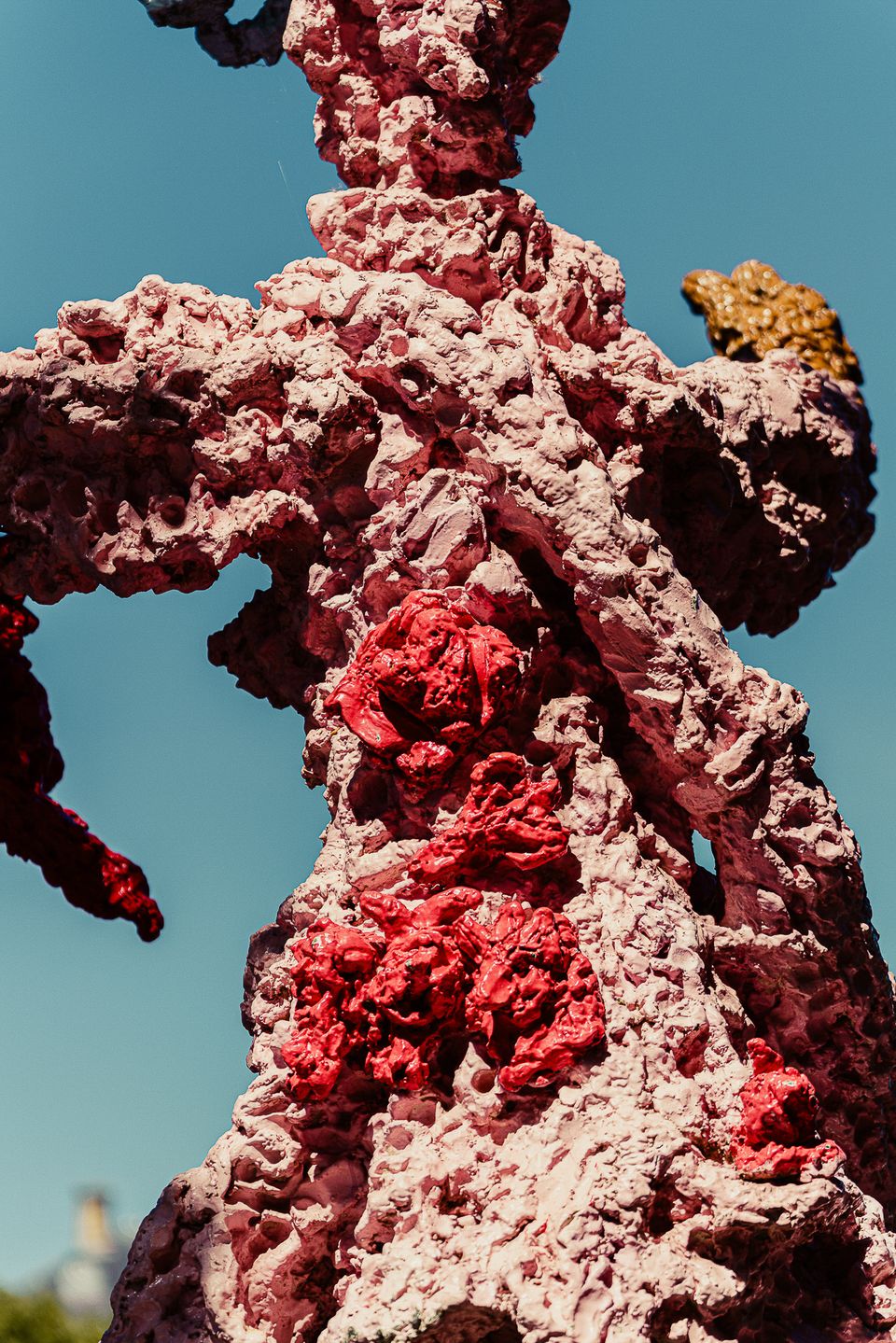
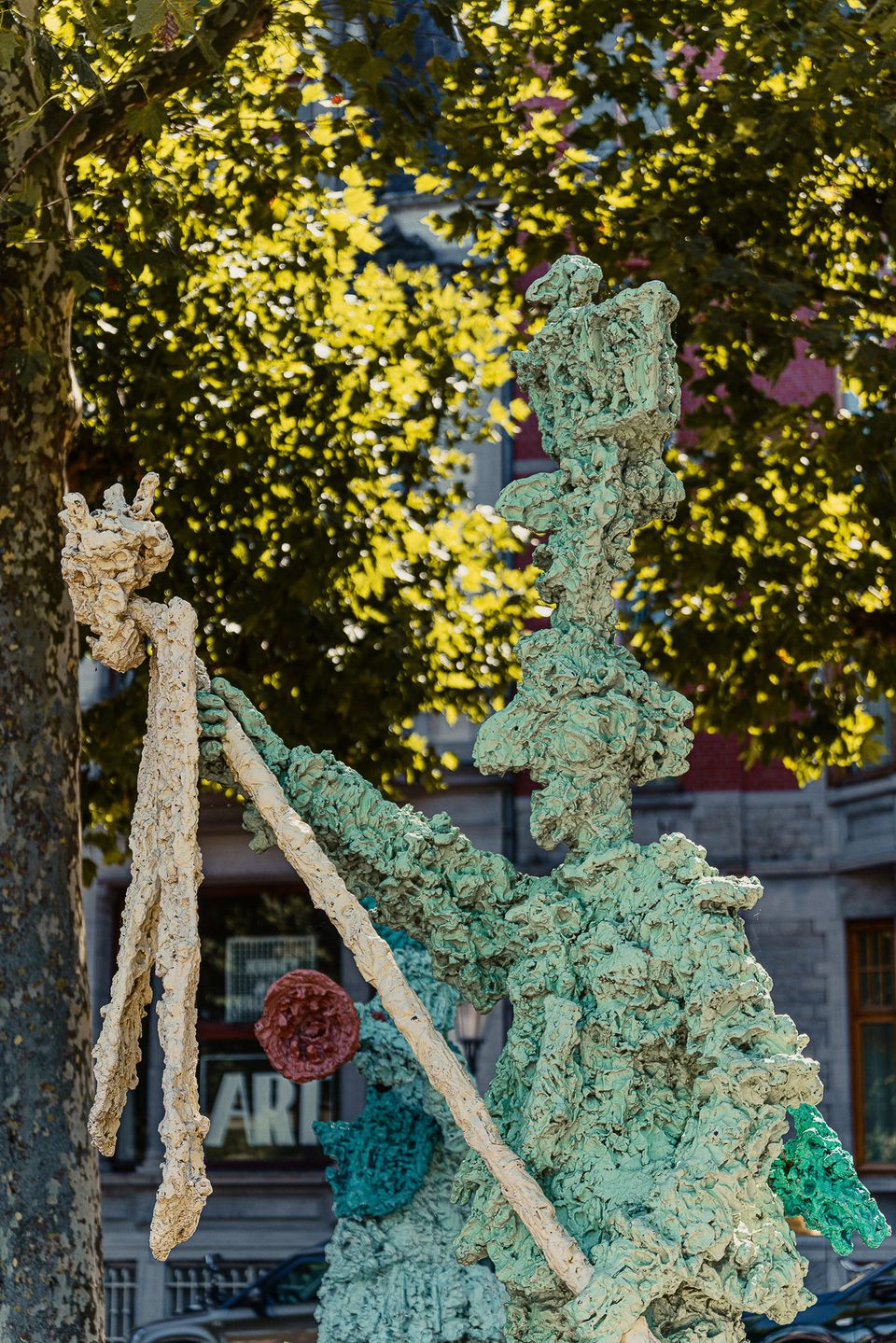
This colourful brass band by artist Han van Wetering (1948) marches, as it were, onto the Vrijthof. Just like the participants in the annual Zate Hermeniekes Competition on Shrove Tuesday, when they gather around this group of sculptures. The bands then play to the very best of their ability and are all awarded 11 points afterwards. This means that everyone wins first prize.
The first ‘hermenie’
Maastricht’s first ‘zaate hermenie’ was founded in 1959 by musicologist and politician John Hoenen (1935). Following this, several such brass bands emerged in the decades that followed. They have playful names such as ‘Laat en Zaat’ or ‘Vreug en Neugter’. The release of the song *De Zaate Hermenie*, also by Hoenen, in 1972 further boosted the number of such bands. They have since become an integral part of Maastricht’s carnival, which is celebrated mainly in the streets.
What’s on display?
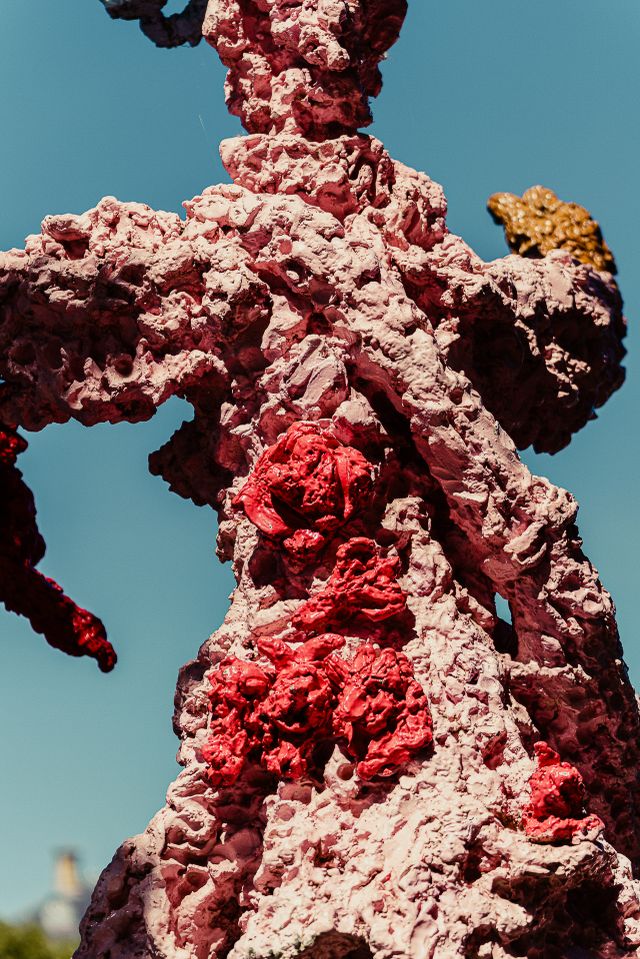
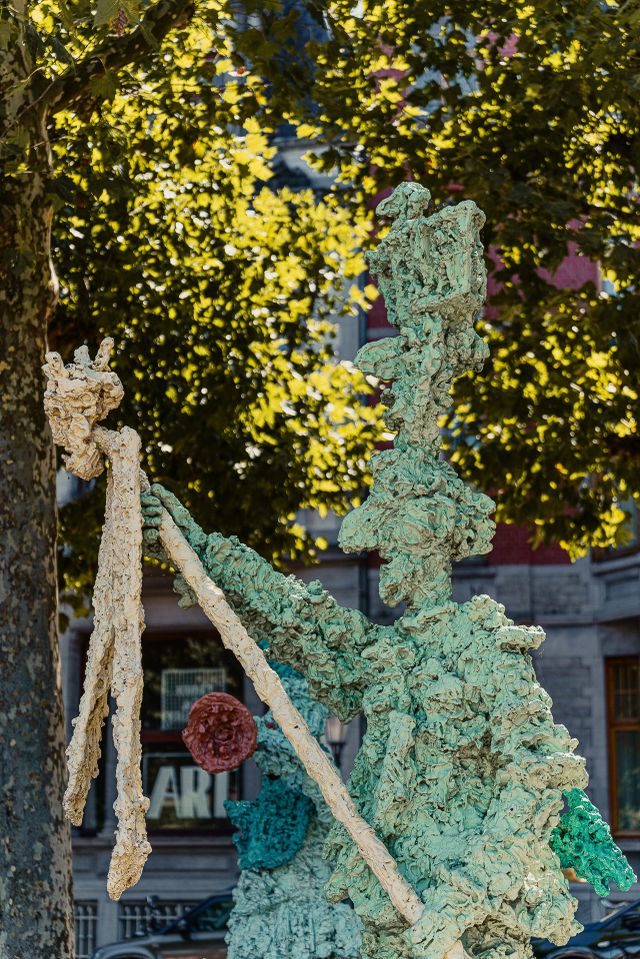
Van de Wetering modelled the sculptures in clay. Up close, you can clearly see the imprints of his fingers. The artist then made wax figures from these clay models, which were subsequently cast in bronze.
Each of the five musicians has a different role. At the front, dressed in yellow, the smallest musician plays a concertina, closely followed by a green standard-bearer. Behind them is a trumpet player with wings and horns, flanked by a pink figure playing the bombardon. Bringing up the rear is a brown musician with the ‘dikke zjiem’ – the big drum – bringing the colourful procession to a close.
Across the square, in another corner of the Vrijthof, there is another artwork that refers to carnival. In 1978, Frans Gast (1927–1986) captured the spirit of the folk festival in the fountain ‘Hawt uuch vas’. Surrounding a bluestone column topped with sprinklers, you can see five carnival revellers holding hands.
About the artist
Han van Wetering (1948) lives and works in his hometown of Maastricht. He studied here at the Academy of Fine Arts and at the ‘ Jan van Eyck Academie ’. His sculptures can be found at around thirty locations in public spaces across the Netherlands and Germany. As well as *De Zaate Herremenie*, Van Wetering is best known in Maastricht for the bronze statue of Saint Servatius near the police station and the bronze doors of the Provincial Government building and the Natural History Museum.
Fun fact
Did you know that , despite the artist’s wishes, the musicians of De Zaate Herremenie did not yet have their current colourful outfits when the sculpture was unveiled in 1993? Initially, they were cast in bronze. During a renovation of the Vrijthof car park ten years later, the group had to be temporarily returned to Van Wetering’s studio: a perfect opportunity to finally give them their colourful jackets.
-
You’ll find De Zaate Herremenie in the city centre
Location

Shoppers will enjoy the city centre. This is where the main shopping streets and shopping centres can be found. This part of the city also has the well-known highlights such as the Vrijthof square and the town hall on the Markt square.
Discover the surroundings
Tips in the area
Skip map elements