
Kesselskade
A lively quay along the Meuse, with terraces, historic façades and a fascinating history by the water.


Along the Kesselskade, old façades face the wide promenade by the Meuse. Terraces overlook the water, and Wyck lies on the opposite bank. The open space between the houses and the river may seem as though it has always been there, but it is precisely here that Maastricht has changed significantly over the past two centuries.
A canal once flowed here
In the nineteenth century, the Liège–Maastricht Canal was constructed. It ran between what is now Kesselskade and the Meuse. To make way for the canal, a row of houses was demolished. The street that stood here at the time was thus transformed into a quay along the water.
For over a century, boats sailed through the canal. After the canal had lost its function, it was filled in in Maastricht. In the early 1960s, the canal here made way for the Maasboulevard.
From Bokstraat to Kesselskade
Before the canal was built, the street here was called Bokstraat. With the arrival of the canal, not only did the surroundings change, but later the name did too.
Since 1875, this spot has been known as the Kesselskade. The quay was named after Mathias Kessels, a Maastricht-born sculptor who, in the nineteenth century, became particularly well-known outside his hometown.
From canal quay to promenade
Even after the canal disappeared, the area continued to change. In the 1990s, part of the traffic was moved underground. Above the tunnel, the wide open space along the ‘ Meuse ’ that stands there today was created.
On one side stand the old façades of the Kesselskade; on the other, the Meuse flows. In between, there is space for terraces and walks along the water’s edge. Thus, where ships once sailed through a canal, an open riverside promenade has now been created.
-
Kesselskade can be found in City Centre
Location
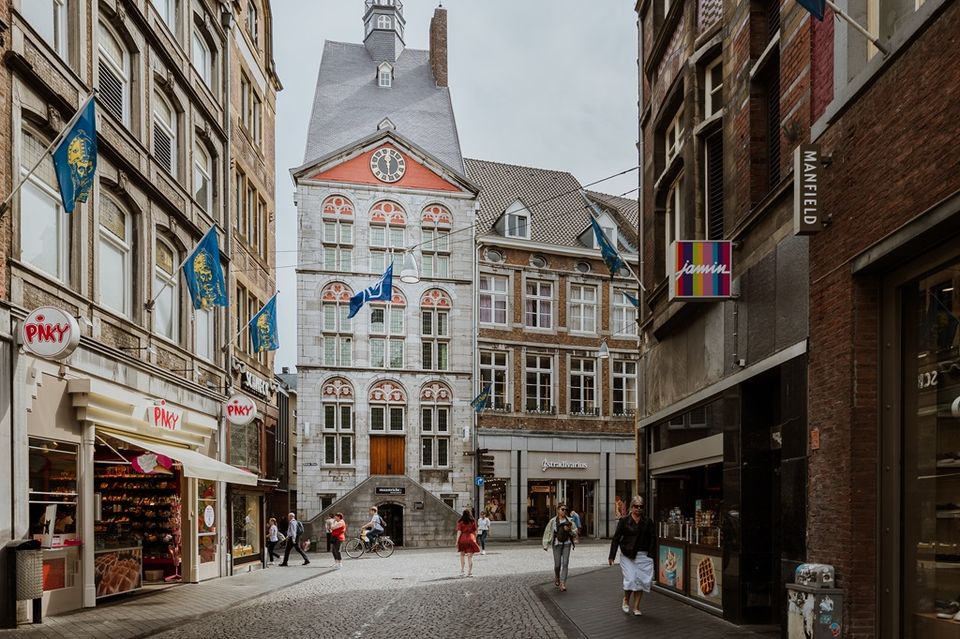
Shoppers will enjoy the city centre. This is where the main shopping streets and shopping centres can be found. This part of the city also has the well-known highlights such as the Vrijthof square and the town hall on the Markt square.
Discover the surroundings
Tips in the area
Skip map elements