
City wall
With a first and second walled enclosure, let yourself be carried away by medieval Maastricht and its impressive military history.
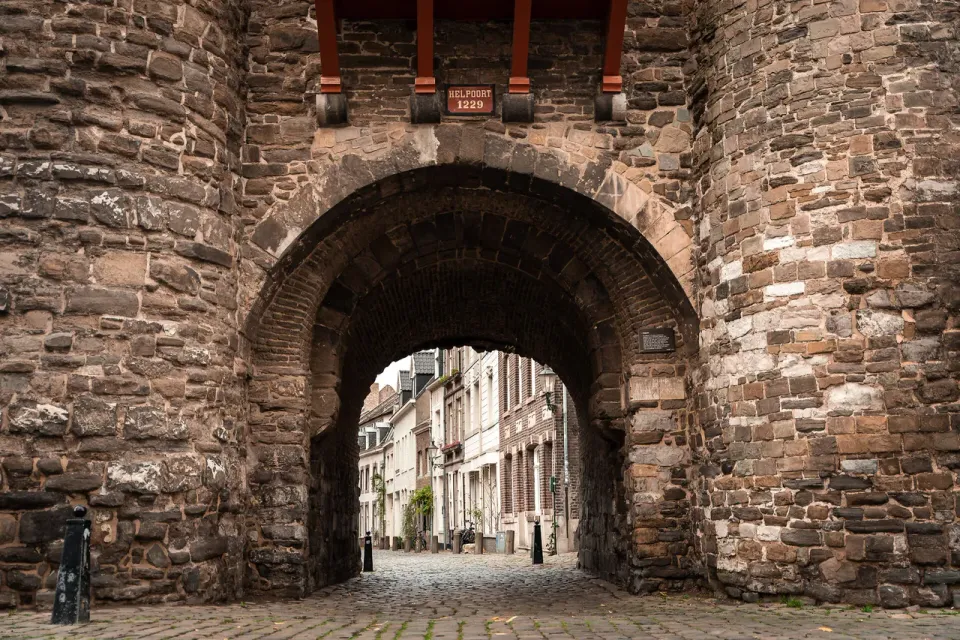

In the 13th century, work began on the construction of a city wall to enclose what is now the city centre and part of the Jeker Quarter. The 2.4-kilometre-long wall served to protect the urban area on the left bank of the Meuse. On average, the wall was 5.5 metres high and enclosed an area of approximately 36 hectares. Several architectural highlights in the city form part of this original city wall, such as the Helpoort, the Jekertoren and the Onze Lieve Vrouwe city wall. Can you imagine that these structures have been standing here for over 750 years?
Damaged by the enemy
How the first city wall came about is not entirely clear. The story goes around that at the time of the Siege of Maastricht, when the French tried to take Maastricht, a fence was already in place. An earthen wall with wooden pallisade on top. As this was so damaged by the troops, the then administrator, the Prince-Bishop of Liège, then ordered the construction of a stone wall.
Grey and brown bricks
As the city expanded, a new, second city wall was built in the 15th and 16th centuries. The Padre Vinck Tower, right next to the first city wall, is part of this second walling. See the difference? The grey natural stone is newer than the brown coal sandstone. In the centuries that followed, the first city wall still functioned as a line of defence and was also maintained. Although parts were still often demolished and later rebuilt.
The first rampart along the Meuse , on the other hand, was always used as the primary defensive wall.
-
City wall in Jeker Quarter
Location
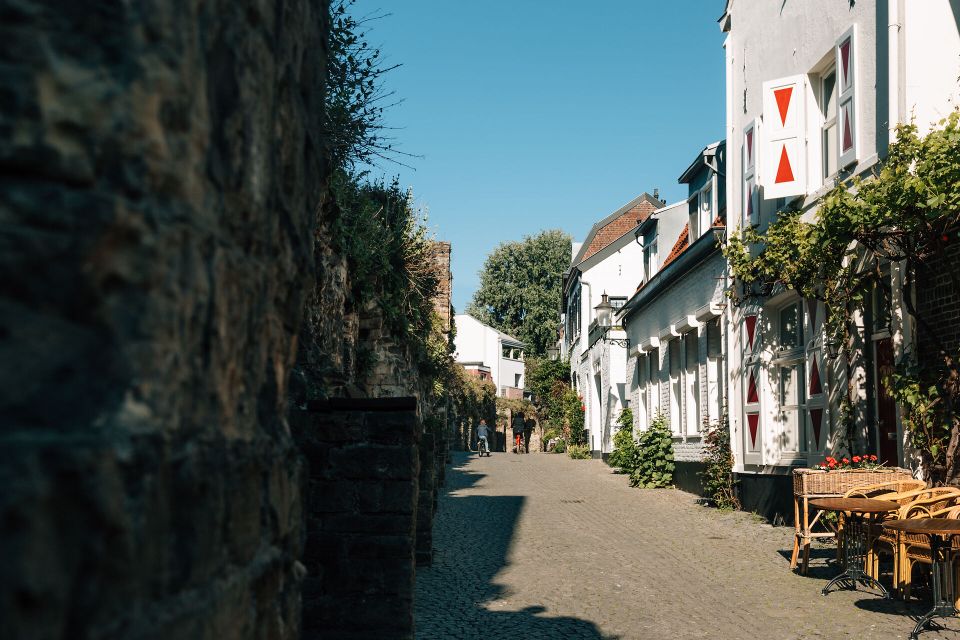
In the Jeker Quarter, you will find atmospheric restaurants and cafés with the finest terraces, the historic city wall, a bakery with a water mill where flour is ground for the tastiest flans and, if you are lucky, live music in the streets.
Discover the surroundings
Tips in the area
Skip map elements